
A hosted payment page isn't just a technical endpoint that appears after someone clicks “Buy.” It's part of the product experience, and its layout can either clarify the purchase or introduce doubt at the final step. Strong hosted checkout examples balance payment choice, pricing clarity, trust, mobile usability, tax presentation, and post-purchase continuity.
The useful question isn't which provider has the most attractive screen. It's which reusable UX pattern fits your buyer journey and operating model. Each example below is evaluated through five lenses: page structure, payment flow, conversion tactic, operational trade-off, and software-selling scenario. The list includes both Merchant-of-Record platforms and gateway-led tools, so you can separate checkout design from responsibility for tax, compliance, refunds, and customer operations.
Table of Contents
- 1. Creem
- 2. Stripe Checkout
- 3. Paddle
- 4. Lemon Squeezy
- 5. FastSpring
- 6. Chargebee Hosted Checkout
- 7. PayPal Payment Links and Buttons
- Hosted Payment Pages, 7-Platform Comparison
- Turn These Checkout Patterns Into a Test Plan
1. Creem
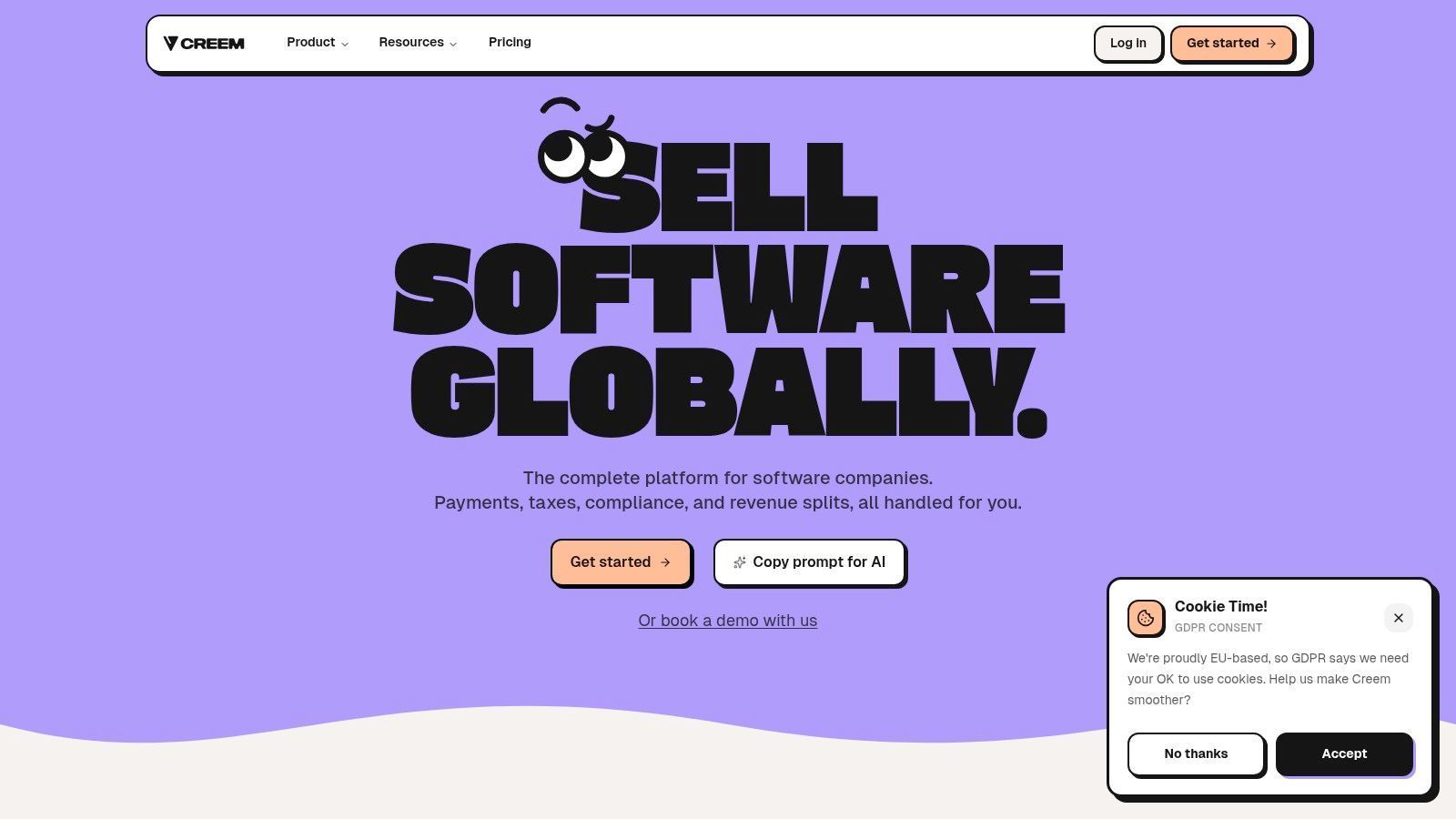
Creem's hosted checkout is built around an operational decision: keep payment, billing, fulfillment, and global selling in one system. A buyer can move from a product page to a provider-hosted page, select an available method, complete payment, and receive a license key or file download without requiring separate billing infrastructure. Access inside your own app is the one step you wire up, because your server confirms the payment through Creem's API or a verified webhook before it grants access.
That scope makes the page more than a card form. Creem combines Merchant-of-Record coverage, subscription billing, tax handling, revenue splits, affiliate tooling, license keys, secure file delivery, invoicing, and storefront capabilities for software and digital-product sellers. Its Merchant-of-Record model addresses international tax administration, with Creem stating that it handles VAT, GST, and sales-tax collection, filing, and remittance in 190+ countries. Creem's platform lists a flat fee of 3.9% + $0.40 per successful transaction, with no setup or hidden monthly fees. On a $100 sale, you keep $95.70 after that fee, as Creem's pricing page shows.
The reusable UX pattern
The reusable pattern is a software-specific hosted checkout with operational continuity. Buyers pay by card, PayPal, Apple Pay, or Google Pay, in their own currency. The same checkout comes in three forms, depending on where you want the purchase to happen:
- Hosted checkout. Creem serves the page, and you link to it from a button, an email, or your storefront.
- Branded checkout on your domain. The pay flow runs on a domain you own, with your logo and colors. It needs DNS records, and Apple Pay and Google Pay work on that verified domain.
- Embedded checkout. A modal or inline iframe keeps the buyer on the page that convinced them.
For subscriptions, seat-based billing, proration, plan changes, and a self-service portal connect the initial payment with the later billing relationship.
That connection reduces the number of systems a team must coordinate. A polished payment page can still create operational work if taxes, renewals, partner splits, and software access are handled elsewhere. Creem's native revenue splits and payouts to bank accounts or USDC wallets fit products with co-founders, contractors, partners, or affiliates who require automated allocation. On the standard plan, revenue splits and the affiliate platform each add 2%, and USDC payouts cost 2% of payout volume.
Practical rule: Treat the hosted page as the front door to billing, fulfillment, and partner operations, not as an isolated payment form.
The trade-off is predictable pricing and centralized operations versus maximum negotiation flexibility. A flat transaction fee is easy to model, while high-volume businesses should compare total cost with bespoke gateway pricing. Some newer capabilities, including the affiliate platform and mobile app, are marked beta. Teams should confirm their maturity, support expectations, and service requirements before placing a mission-critical flow on them.
2. Stripe Checkout
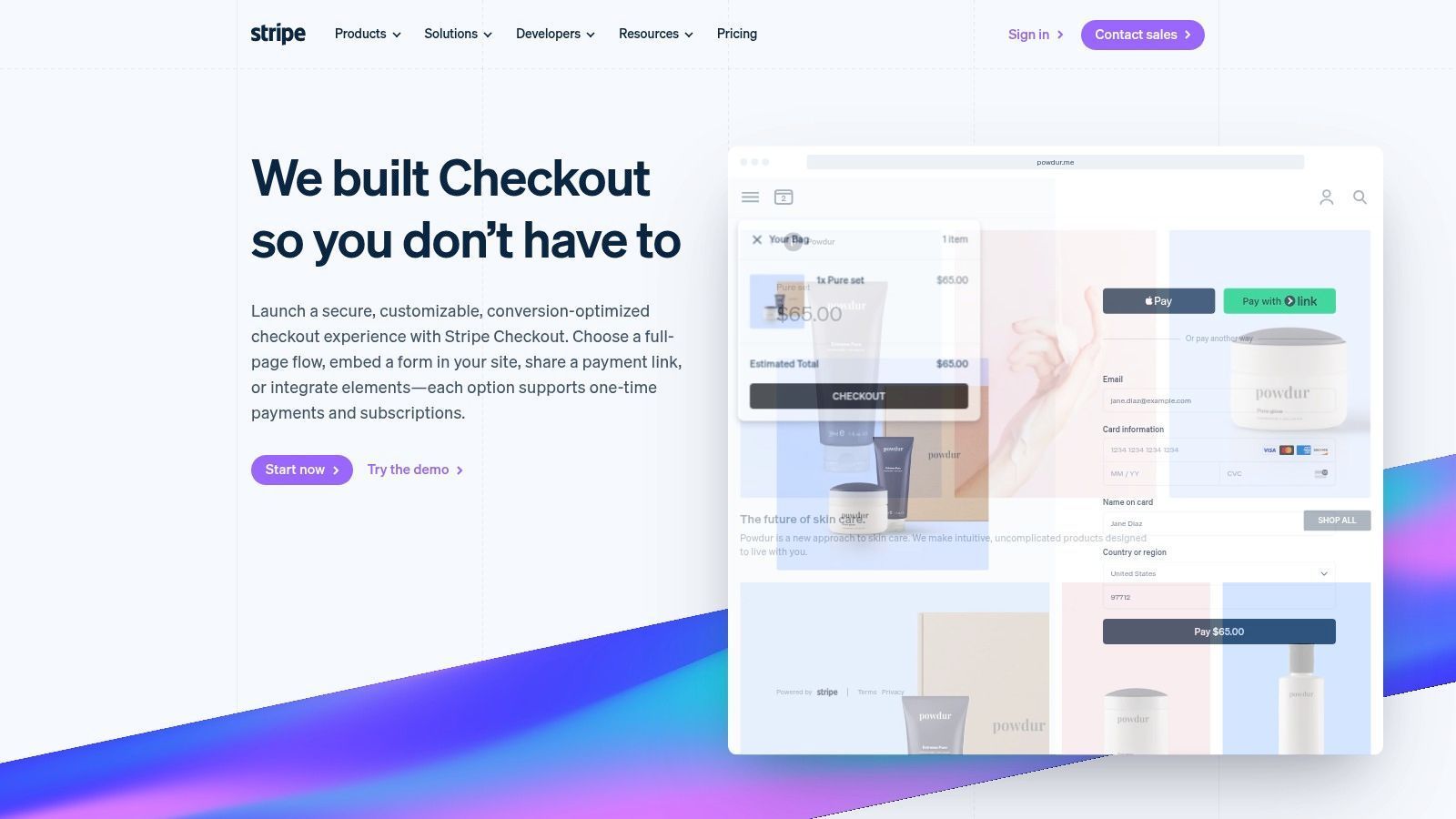
Stripe Checkout is the clearest example of a gateway-led hosted page. The merchant creates a Checkout Session, sends the buyer to a Stripe-hosted URL, and receives transaction results without collecting raw card details on its own infrastructure. Stripe also supports embedded checkout and Payment Links, so the same product can use a redirect for speed, an embedded flow for continuity, or a shareable link for sales and marketing use cases.
The visual pattern is deliberately restrained. Product information, amount, contact details, payment methods, and confirmation are grouped into a predictable sequence rather than an elaborate branded storefront. That structure works well for SaaS teams that already own pricing and account creation but want a ready-made payment layer.
The operating boundary
Stripe Checkout supports cards, Apple Pay, Google Pay, saved payment details, subscriptions, trials, coupons, tax display, multicurrency, and localization tools. Those capabilities make it a strong reusable pattern for a product-led SaaS funnel where the buyer should reach payment quickly and the engineering team wants several integration styles.
The important distinction is that Stripe Payments isn't a Merchant of Record. The merchant remains responsible for tax registration, filing, remittance, and the commercial relationship. Stripe can provide payment and billing infrastructure, but it doesn't automatically transfer every global selling obligation to the provider.
That difference changes the architecture around the page. You may need separate systems for tax, invoicing, revenue recognition, customer support, and digital entitlement. Teams comparing this model with an MoR should distinguish the checkout experience from the responsibilities behind it. This comparison of Paddle and Stripe is useful for framing that decision.
The cleanest hosted checkout can still leave the merchant with the harder finance work.
Stripe's strength is flexibility. Its weakness is that flexibility can become a larger operating stack as a SaaS business adds markets, subscriptions, tax rules, and partner payouts.
3. Paddle
Paddle uses a Merchant-of-Record checkout pattern built around an overlay or an inline checkout. The overlay can preserve more of the surrounding product context, while inline checkout embeds the payment form in a page you control and gives the buyer a focused payment environment. Both approaches are reusable for SaaS teams that want a branded purchase journey without building the entire billing and tax layer themselves.
The page can present cards, Apple Pay, and PayPal, with localized pricing and tax treatment. That makes the pattern suitable for software products selling across markets where the amount a buyer sees needs to reflect local currency and whether prices are shown gross or net of tax.
Where the pattern fits
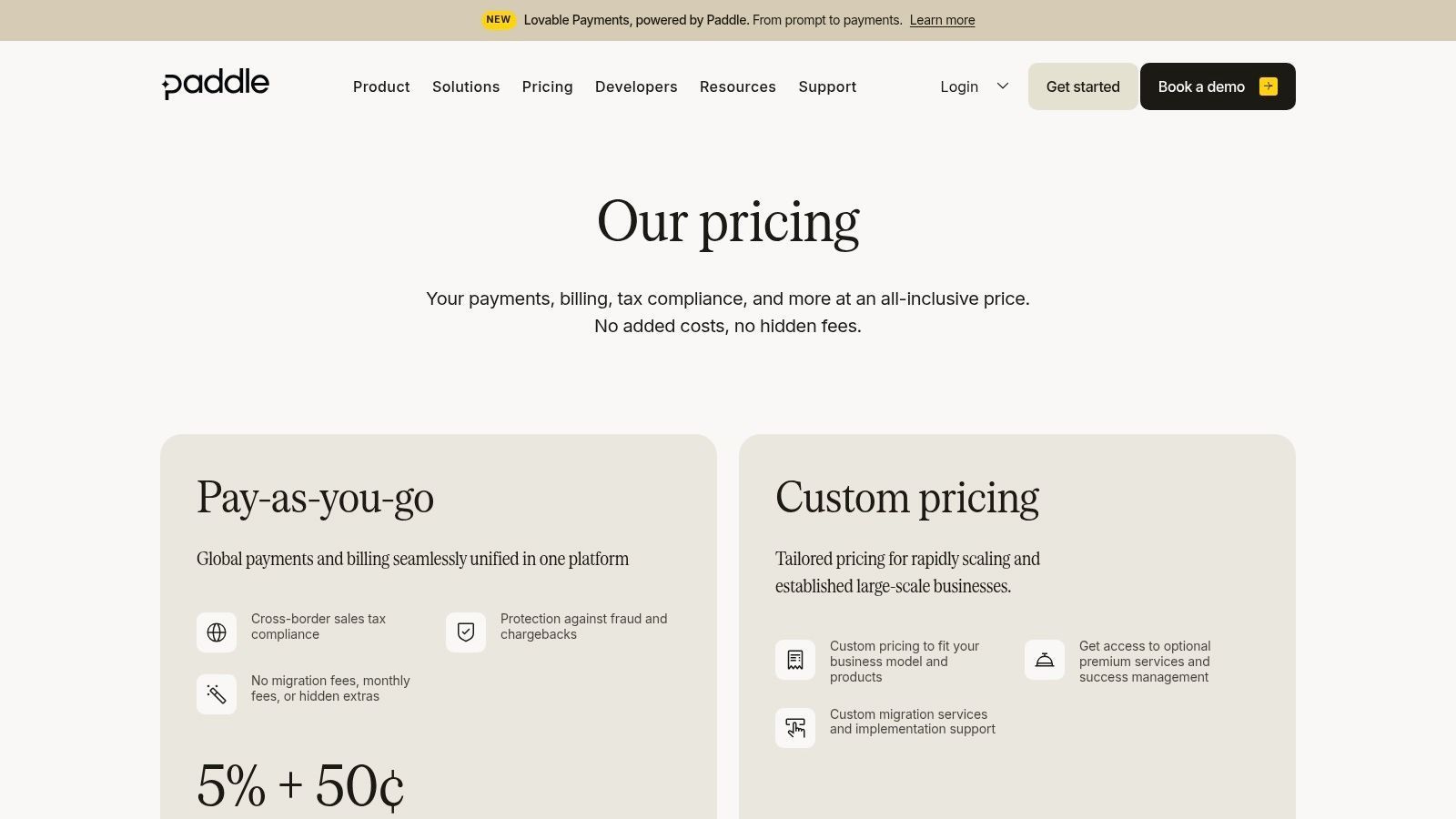
Paddle handles tax registration, collection, filing, remittance, and related Merchant-of-Record responsibilities. It also positions the checkout alongside subscription management, fraud and chargeback handling, and buyer support. For a small software company, that can remove a considerable amount of finance and compliance coordination from the product team's roadmap.
The reusable lesson is the relationship between localized price presentation and operational ownership. A buyer sees a market-aware checkout, while the seller can rely on the provider for much of the tax and payment administration. That's more strategically important than whether the page uses an overlay or redirect.
The trade-off is commercial and coverage-related. An all-in MoR fee can be less attractive than gateway-only pricing for businesses with large average order values, and some PSPs offer a wider range of long-tail local payment methods. Teams should therefore map their target countries and preferred payment methods before treating a polished global checkout as a complete localization strategy.
Paddle's quickstart and JavaScript integration make the pattern accessible to development teams that want to ship without constructing a billing platform. It's especially appropriate when the product has recurring plans, international buyers, and a small operations function. It's less compelling when the business needs unusually deep control over payment routing, custom billing logic, or a broad local-method portfolio.
4. Lemon Squeezy
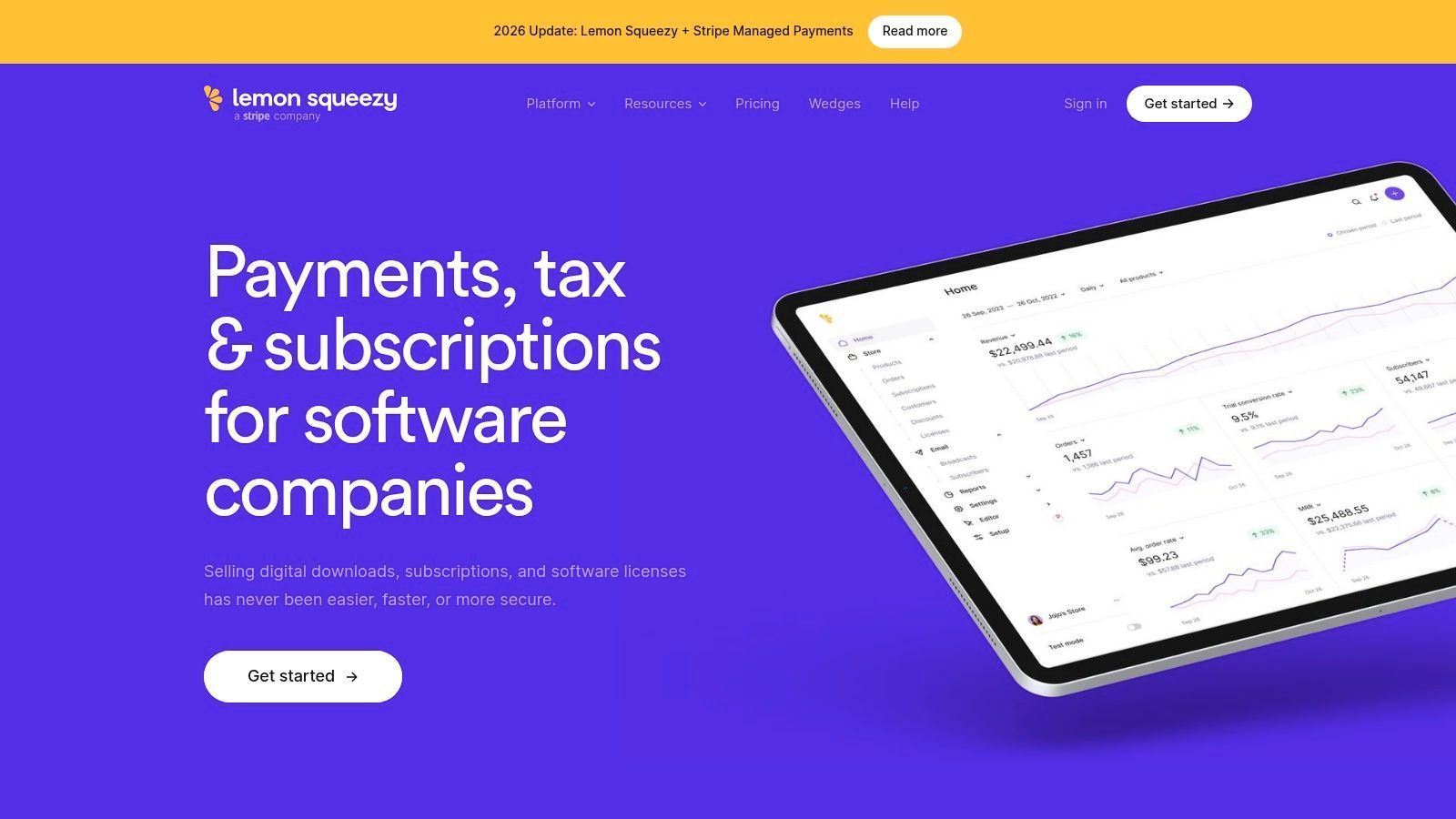
Lemon Squeezy demonstrates the low-engineering Merchant-of-Record pattern. Sellers can use a hosted checkout page, an overlay modal, or shareable checkout URLs. That gives an indie maker or small digital-product team a direct route from a button, campaign, email, or social post to payment without first building a complete storefront.
The layout prioritizes clarity over extensive configuration. A product, price, buyer information, payment method, and receipt can move through a compact flow. The overlay option keeps the buyer closer to the original landing page, while a standalone URL works well when the purchase starts outside the product site.
Why this works for digital products
Lemon Squeezy handles VAT, GST, and sales tax as a Merchant of Record and provides receipts and buyer support. Its commerce features include cards, Apple Pay, PayPal, and localized currencies, while discounts, bundles, and subscription dunning address common digital-product purchase patterns.
The reusable UX idea is one offer, one destination, one fulfillment expectation. It works well for a plugin, template, downloadable tool, or lightweight subscription where the buyer doesn't need a complex configuration step before paying. A simple checkout can also reduce the amount of product education that has to happen inside the payment flow.
There are limits. International payments, meaning buyer payments from outside the United States, incur an additional fee on top of the standard transaction fee, and the platform has fewer enterprise features than larger or more mature MoR environments. That makes it a strong fit for speed and simplicity, but a less obvious choice for a software company that needs intricate account hierarchies, advanced commercial terms, or extensive enterprise controls.
Use this pattern when the purchase decision is already made before checkout. If the buyer needs seat selection, negotiated pricing, complex tax exemptions, or multiple related products, a more configurable billing and checkout architecture may be appropriate.
5. FastSpring
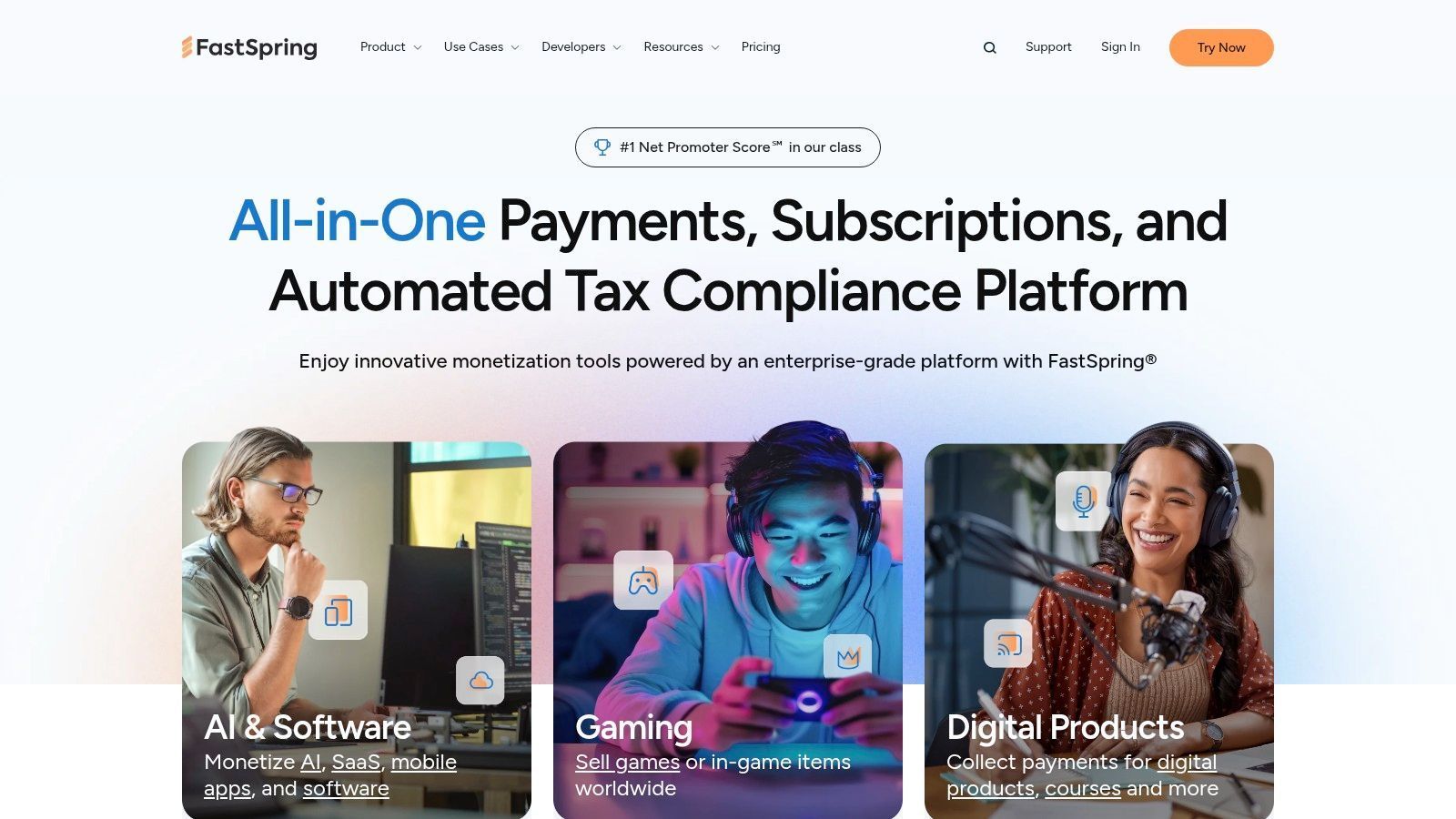
FastSpring represents the internationalized catalog pattern. Instead of treating localization as a currency selector added at the final step, it connects the hosted checkout to localized product catalogs, tax display, payment methods, and price conversion. That suits software and SaaS businesses whose buyer experience changes materially by market.
The checkout can support local payment preferences such as iDEAL, Pix, PayPal, and Apple Pay, alongside card payments. Currency and tax presentation can be configured through gross or net pricing models, giving teams more control over how the commercial amount appears to buyers in different regions.
The trade-off behind depth
FastSpring operates as a Merchant of Record, handling tax filing and remittance along with chargeback responsibilities. Its value is strongest when international selling isn't a side feature but a core part of the product's distribution model. A localized checkout can reduce the mismatch between the buyer's expectations and the payment methods offered at the point of purchase.
The operational cost is complexity. A localized catalog needs careful product, price, tax, and payment-method governance. Small teams may find that the platform feels heavier than a creator-focused MoR, particularly if they sell a narrow product range in a limited set of markets.
FastSpring doesn't publish list pricing and requires a sales conversation for terms. That doesn't make the model unsuitable, but it does mean evaluation must include commercial discovery rather than relying on a public rate card. Teams should ask how rollout, support, localization, refunds, subscriptions, and reporting will work together.
For a broader explanation of the Merchant-of-Record operating model, see this guide to Merchant of Record platforms. The key selection question is simple: do you need a globally localized catalog, or do you need the lightest possible path to a working payment page?
6. Chargebee Hosted Checkout
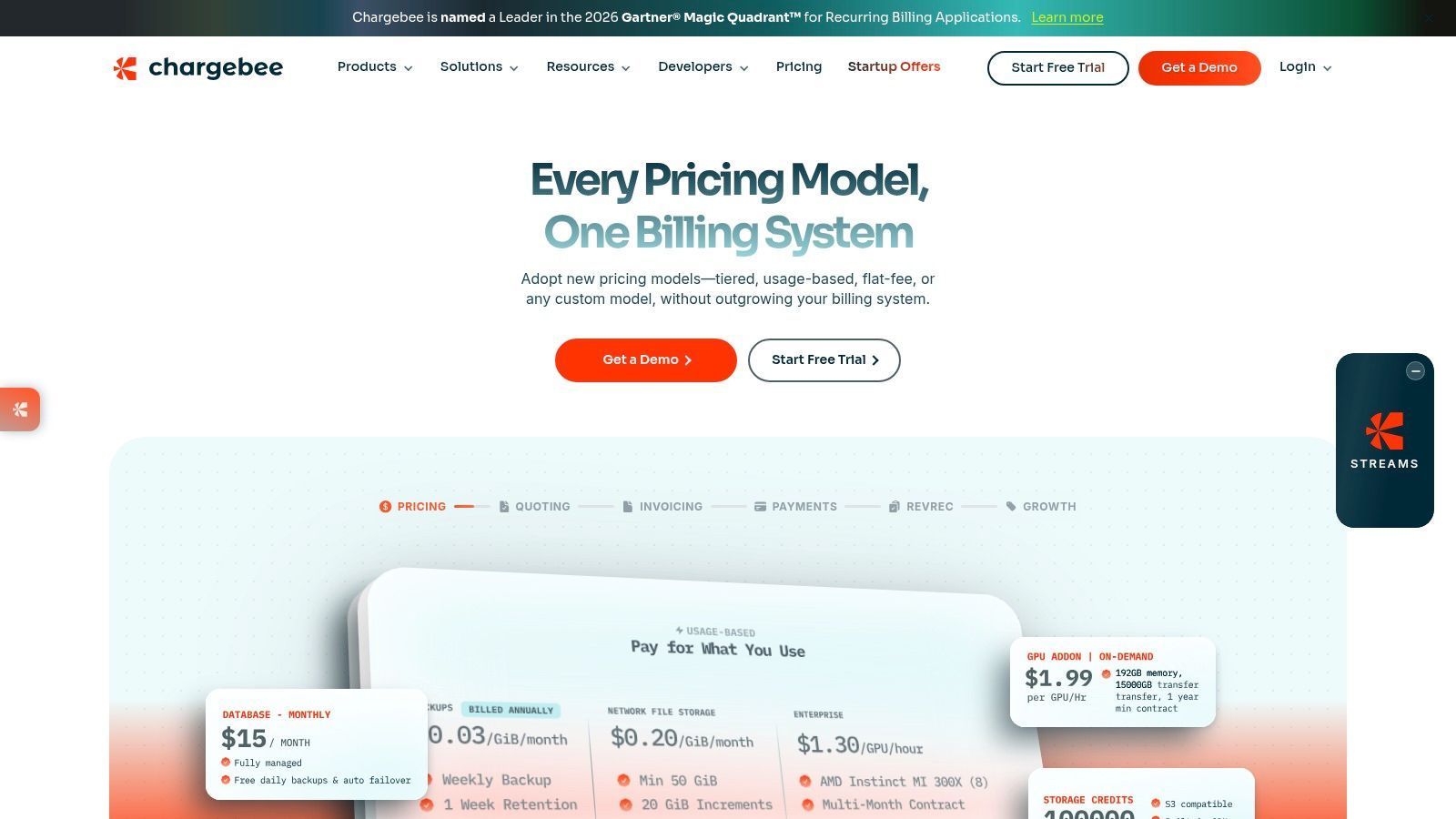
Chargebee's hosted checkout is built around a subscription configuration pattern. The payment page can be redirected or embedded through Chargebee.js, while the surrounding platform manages plans, add-ons, coupons, proration, dunning, pricing tables, and analytics. That makes the checkout less about a single transaction and more about translating a billing model into a purchase flow.
For a SaaS buyer, the page may need to communicate more than a product name and a total. It may need to reflect a plan, seats, add-ons, a trial, a coupon, billing frequency, and the consequences of changing the subscription later. Chargebee is well suited to teams where those rules are central to the business.
Keep billing logic visible
Chargebee supports multiple gateways and payment options including Apple Pay, Google Pay, and PayPal. The hosted page can reduce the merchant's PCI compliance scope, but Chargebee isn't a Merchant of Record. The merchant still owns tax and commercial responsibilities unless separate systems or providers cover them.
That separation is easy to miss because the checkout and billing experience may feel complete. In practice, a team must evaluate the payment page alongside its gateway configuration, tax strategy, invoicing process, and customer-support workflow.
Billing test: If a buyer changes seats or adds an add-on tomorrow, verify that the checkout model and the subscription system describe the same commercial rules.
Chargebee's strengths become less valuable when the product has one simple price and no meaningful subscription lifecycle. Platform fees, monthly plans, and implementation complexity can be difficult to justify for a basic offer. For a multi-plan SaaS product with proration, dunning, and gateway flexibility, however, the pattern gives product and finance teams a stronger foundation than a simple hosted card form. Teams considering alternatives can use this Chargebee alternatives comparison to frame the trade-offs.
7. PayPal Payment Links and Buttons
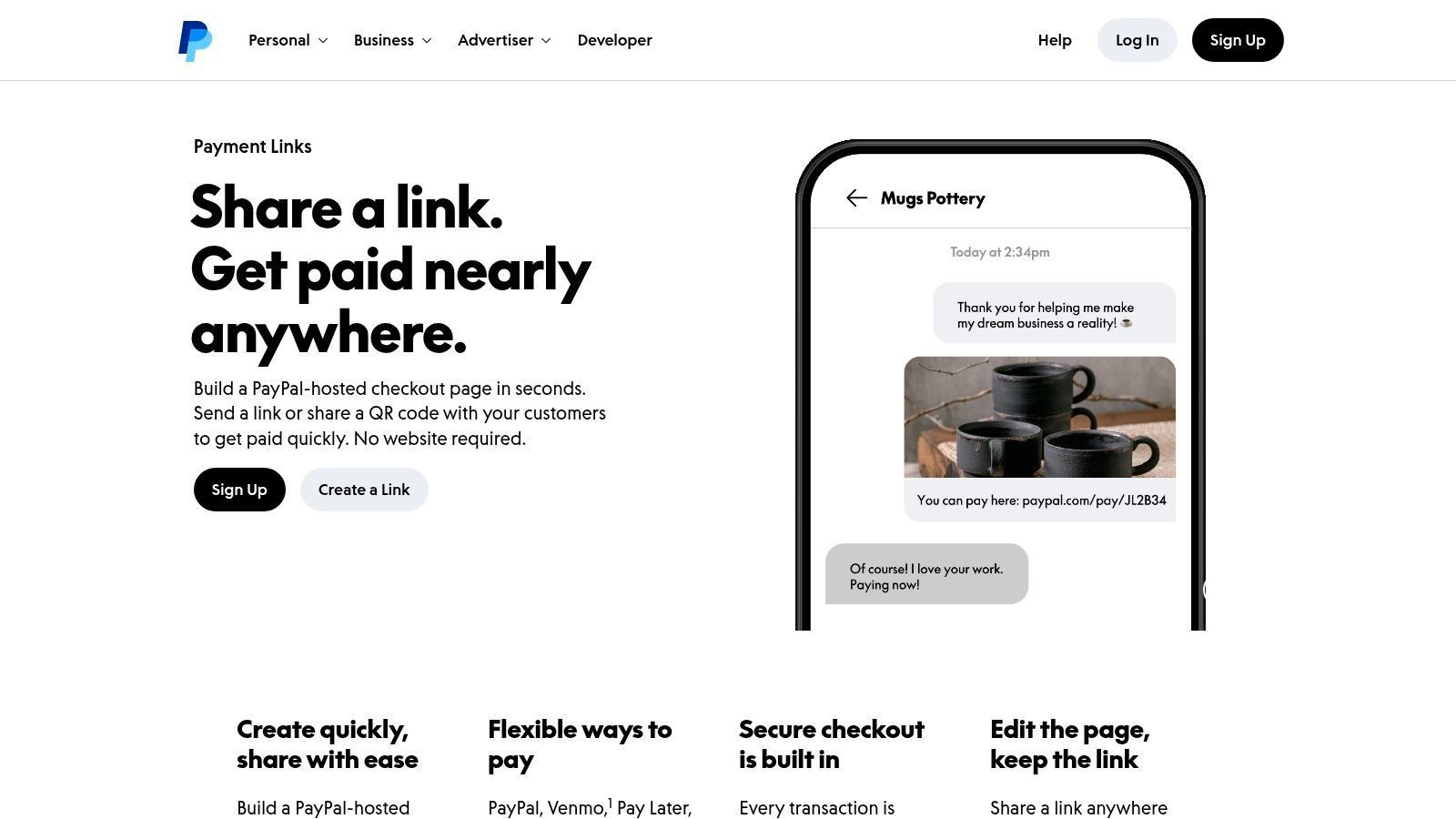
PayPal Payment Links and Buttons use the trust-first no-code pattern. A seller creates a payment link or button, places it on a website, email, social post, or printed material, and sends the buyer to a PayPal-hosted payment page. QR support extends the same flow into offline and event-driven selling.
The page is intentionally less like a custom SaaS checkout and more like a recognizable payment destination. That can help when buyers already prefer PayPal or when the seller has no storefront and needs to accept payment quickly. Cards and Venmo in the United States are also supported, while branding controls provide some continuity between the seller and the hosted page.
The right use case
The reusable pattern is distribution before customization. A payment link can appear in a sales message, campaign, social profile, or QR code without requiring a developer to construct a checkout route. APIs are available for teams that need to create or update links programmatically, but the basic flow remains accessible through the dashboard.
The trade-off is control. Compared with a full checkout framework, PayPal links offer limited customization and less room for complex subscription, catalog, or post-purchase experiences. Fees can also be higher than those of some payment gateways, so sellers should compare the complete commercial model rather than focusing only on setup speed.
This pattern fits a one-off digital product, consultation, event payment, or small campaign where buyer familiarity matters more than a branded purchase journey. It's a weaker fit for a SaaS funnel that needs detailed plan selection, entitlement provisioning, advanced renewal recovery, or a tightly integrated account creation flow.
Hosted Payment Pages, 7-Platform Comparison
| Product | Implementation Complexity 🔄 | Resource Requirements ⚡ | Expected Outcomes 📊 | Ideal Use Cases 💡 | Key Advantages ⭐ |
|---|---|---|---|---|---|
| Creem | Developer‑friendly SDKs + single integration (low–medium) | Minimal tax ops internal; pay flat 3.9% + $0.40; small dev effort | Predictable payouts, automated tax remittance, revenue splits | SaaS and indie makers needing MoR + revenue orchestration | True MoR (100+ countries), built‑in splits, AI/dev tools |
| Stripe Checkout | Prebuilt redirect/embed or Payment Links (very low) | Light dev; you remain responsible for tax/compliance; Stripe fees apply | High conversion, PCI offload; no MoR tax handling | Teams wanting control of merchant/gateway responsibilities | Conversion‑optimized UI, strong docs, flexible integrations |
| Paddle (MoR) | Hosted overlay/full‑page checkout (low) | Offloads tax/legal/compliance; all‑in fee model | Simplified global selling with MoR liability offload | SaaS sellers seeking minimal operational overhead for taxes | End‑to‑end compliance and quick setup for software sellers |
| Lemon Squeezy (MoR) | Very low, no‑code links and hosted modals | Minimal engineering; extra fee for international payments | Fast time‑to‑market, basic MoR tax handling for creators | Digital creators and small teams selling downloads/subscriptions | Extremely fast setup, simple dashboard, creator‑focused UX |
| FastSpring (MoR) | Medium, enterprise onboarding and configuration | Offloads compliance; requires sales/onboarding; custom terms | Deep internationalization and localized catalogs across markets | Enterprise SaaS with complex international/localization needs | Broad market coverage, advanced localization and tax features |
| Chargebee Hosted Checkout | Medium, catalog/proration configuration required | Moderate engineering; multi‑gateway setup; platform fees | Powerful subscription lifecycle controls; you keep merchant duties | Companies needing advanced subscription billing and metering | Rich billing features, multi‑gateway support, analytics |
| PayPal Payment Links & Buttons | Very low, generate links/buttons or embed (very low) | Minimal dev; higher headline fees; limited customization | Fast launches, high buyer trust for PayPal users | Social, QR/instant sales and audiences preferring PayPal/Venmo | Brand trust, instant launch, QR and button support |
Turn These Checkout Patterns Into a Test Plan
The examples separate into two decisions that teams often combine. The first is the UX decision: should checkout open as a full page, appear as an overlay, or remain embedded? The second is the operating-model decision: who handles tax, compliance, refunds, subscriptions, buyer support, and payment relationships?
Under all three UX patterns, a hosted payment runs through the same five steps:
- The buyer clicks Buy on your product or pricing page.
- Your app creates a checkout session or opens a prebuilt payment link, and the buyer reaches the provider's page, overlay, or frame.
- The buyer enters card or wallet details, and the provider authorizes the payment.
- The provider confirms the payment. In a redirect flow it sends the buyer to your return URL, and it emails a receipt if you have receipts turned on.
- Your server confirms the payment through the provider's API or a verified webhook, then grants access.
Steps 4 and 5 don't wait for each other. A webhook can arrive before the buyer's browser returns, after it, or when the buyer never comes back at all.
Start with the buyer journey. A full-page redirect usually gives the provider more control over the payment environment and can reduce implementation work. An overlay can preserve context when the buyer is ready to purchase from a product page. An embedded flow can feel more continuous, but the merchant must inspect what the customer's browser loads on the surrounding page.
PCI guidance distinguishes fully hosted redirects from embedded frames. Both qualify for SAQ A when card entry stays with a PCI DSS-compliant provider, and SAQ A no longer includes Requirements 6.4.3 and 11.6.1. An embedded payment form adds one eligibility condition, which is that you confirm your site isn't susceptible to script attacks that could affect your e-commerce systems. If scripts on your own page collect card data, you move to SAQ A-EP. This hosted payment page guidance explains why “hosted” doesn't automatically mean “no security work.”
Then test the commercial fit:
- Payment methods: Confirm that cards, wallets, bank methods, and local options match the markets you target.
- Localization: Review currency, language, tax display, gross or net pricing, and country-specific payment presentation.
- Subscriptions: Test trials, coupons, seat changes, proration, failed renewals, dunning, cancellation, and self-service management.
- Merchant of Record responsibility: Establish who registers, collects, files, and remits taxes, and who handles buyer support and chargebacks.
- Integration effort: Map checkout creation, redirects, webhooks, entitlement provisioning, refunds, and confirmation delivery.
- Customization limits: Check whether branding improvements require embedded components, custom scripts, or additional compliance review.
- Provider compliance: Ask for the provider's current PCI DSS attestation of compliance and the responsibility matrix that shows which controls stay on your side.
- Integration support: Check which channels you get during setup and after launch, such as docs, email, or chat, and how fast a payment issue gets an answer.
A hosted page is lower scope when card data stays with the provider, but the merchant still owns the security of its own site and browser environment. Inventory the scripts on pages that launch or frame checkout, and limit who can change them. Keeping cardholder data off your systems and proving SAQ A eligibility are separate jobs. In an iframe integration, every payment-page element inside the frame must come directly from a PCI DSS-compliant provider.
Before launch, implement one primary offer and make its price, billing interval, tax treatment, and currency clear. Review the page on mobile, keep fields minimal, show relevant trust signals, define declined-payment and retry states, and connect the success state to confirmation, account creation, and post-purchase access. Then test the moments that break fulfillment:
- The buyer closes the redirect before paying.
- The buyer returns from a wallet app.
- The buyer pays but never lands on your success URL.
- The webhook arrives late, or arrives twice.
A redirect tells you the buyer came back. A verified payment tells you they paid. Grant access from your server after you confirm the payment through the provider's API or a webhook whose signature you have checked, and never from the success URL alone. Make that grant idempotent by recording processed event IDs and keeping one fulfillment record per order, so a duplicate webhook or a concurrent status check can't issue access twice.
Choose the pattern that matches the product's buyer journey and operating requirements. Copying a provider's visual design won't solve a tax ownership gap, an incomplete subscription lifecycle, or a broken fulfillment handoff.
Creem combines hosted checkout with Merchant-of-Record tax handling, subscription billing, global payment methods, software fulfillment, revenue splits, and affiliate operations in one platform. If you want to evaluate a hosted payment page example against a software-specific global selling workflow, visit Creem and review how its checkout and billing tools fit your product.
Hosted payment page FAQ
Can a hosted payment page match my brand?
Yes. Most hosted checkouts take your logo, colors, and theme, and some run on your own domain. If you need control over the layout itself, move to embedded components or your own payment form, and plan for the PCI review that comes with it.
Should I use hosted, embedded, or self-hosted checkout?
Decide how much of the payment page you want to own. Hosted checkout is the least work. Embedded checkout keeps buyers on your page but adds front-end and script work. A self-hosted form gives you full control of the page, and because raw card data then touches your systems, it also gives you the widest PCI scope.
Do hosted payment pages support subscriptions and local payment methods?
Yes, if the provider offers them. You set up subscription plans, renewal handling, and any trials, and local payment methods appear for the countries and currencies the provider covers.