

If you sell through Lemon Squeezy, you need a new provider before it stops processing transactions, including subscription renewals, on March 31, 2027.
Lemon Squeezy’s storefront and built-in affiliates sit alongside the tax handling you get from a merchant of record. Polar handles tax too, with a focus on software billing.
A move also means keeping subscribers’ access working and finding a home for the parts of your Lemon Squeezy setup that you rely on. Choose a poor fit and you could end up rebuilding those workflows again.
This comparison helps you decide where to move your Lemon Squeezy store, and whether Polar can carry the workflows your customers already depend on.
If you'd rather have help with the move, Creem has a Lemon Squeezy migration offer.
Polar vs Lemon Squeezy at a glance
Polar accepts new merchants. Lemon Squeezy does not, and it will stop processing transactions, including subscription renewals, on March 31, 2027. If you have a Lemon Squeezy store, plan your move before that date.
Both platforms act as merchants of record, so tax handling alone does not settle the choice. The billing model matters more.
Polar meters usage events and bills the measured amount after the period, while Lemon Squeezy records usage through its API and bills it in arrears. Both support license keys.
Both platforms’ base transaction rates start at 5% + 50¢. Polar also offers Pro at 3.8% + 40¢ per transaction for $20 a month.
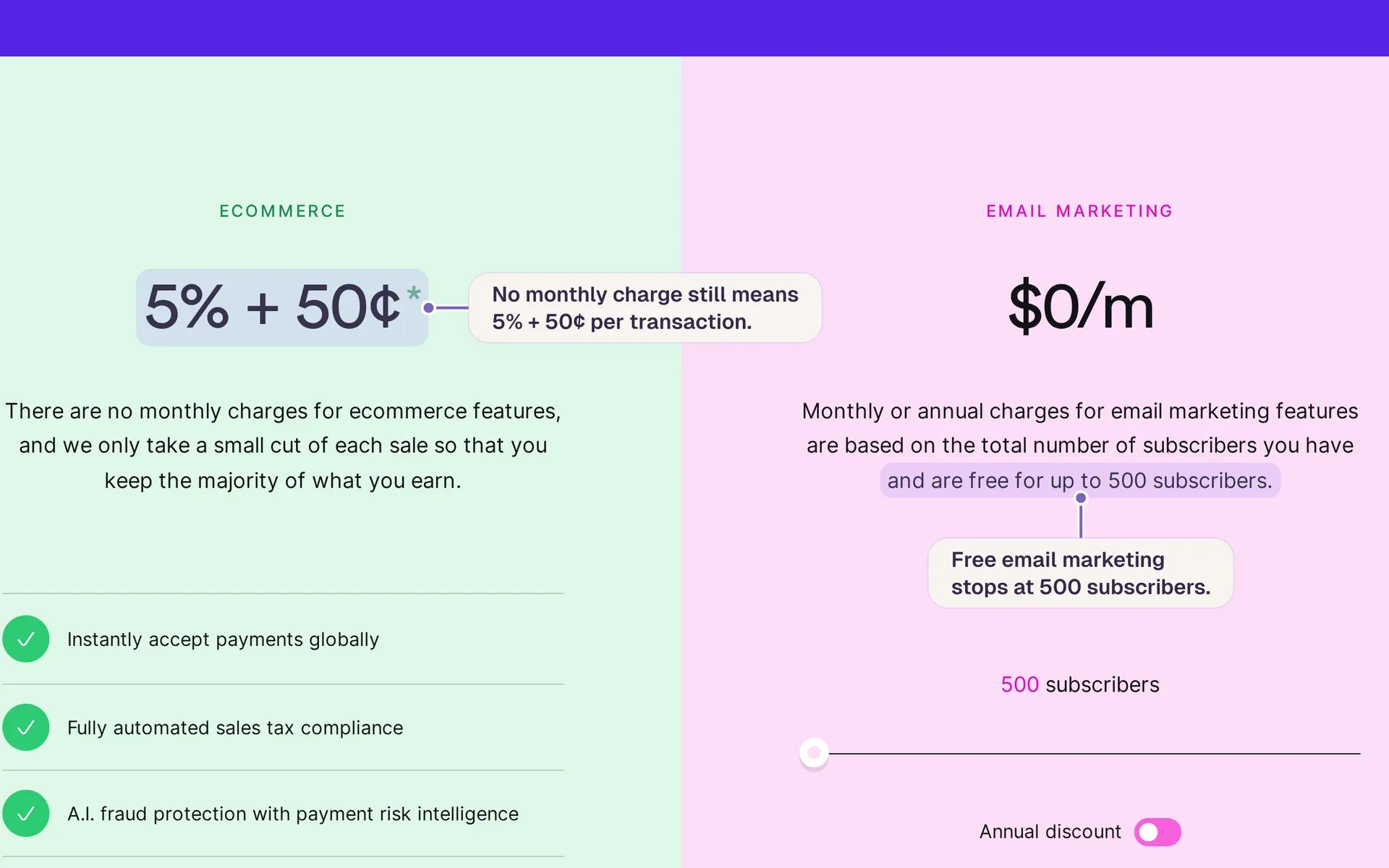
For 100 $100 subscription payments made with US-issued cards in a month, Polar Starter’s transaction fees would total $550, Polar Pro would cost $440 including its monthly fee, Lemon Squeezy’s base and subscription fees would total $600, and Creem’s transaction fees would be $430.
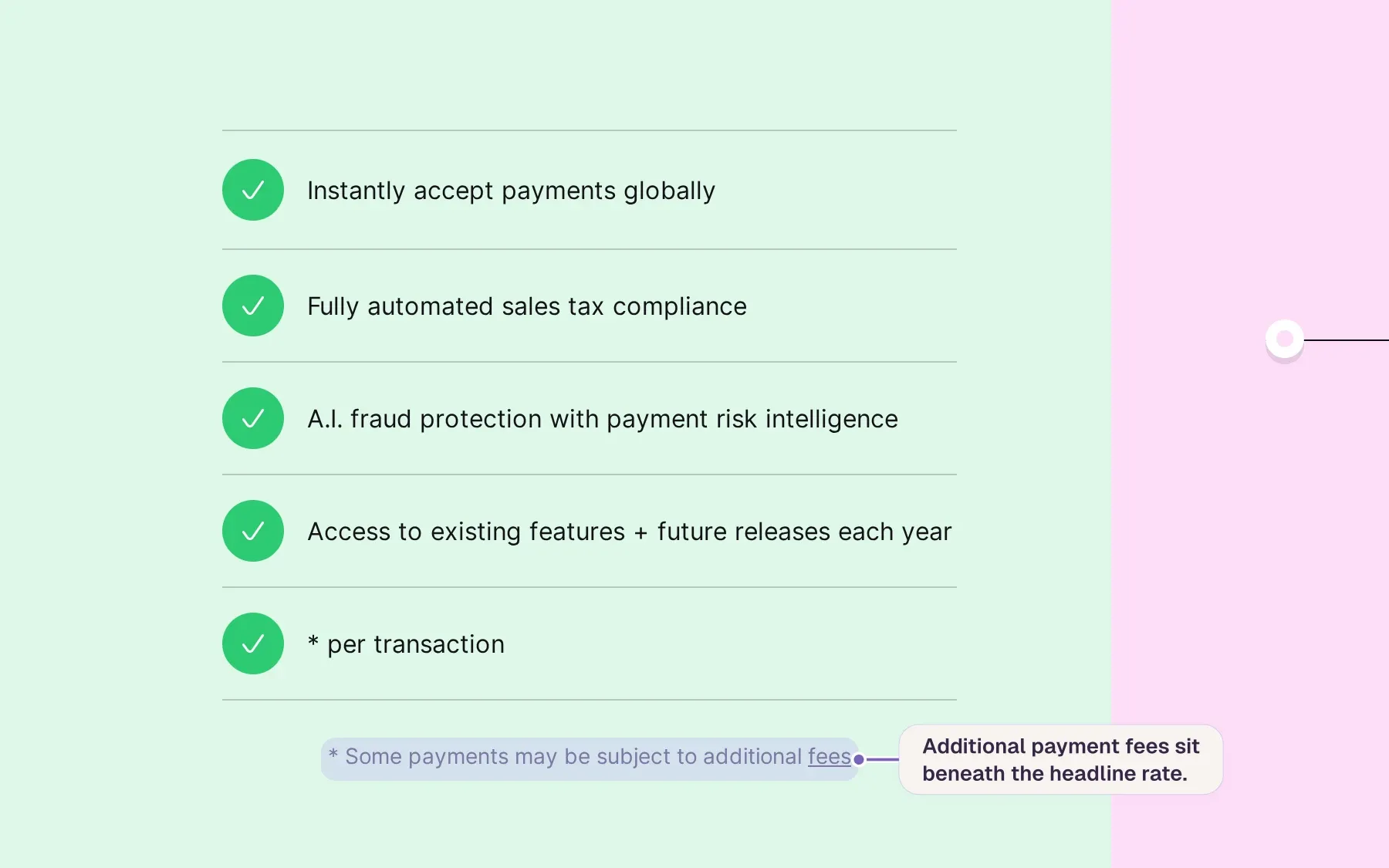
At 300 such payments, Polar Pro would cost $1,280, Lemon Squeezy’s base and subscription fees would total $1,800, and Creem would cost $1,290. These examples exclude tax, feature add-ons and payout costs.
For measured usage, check how Polar’s meters and invoice cycles fit your integration needs.
If you already sell through Lemon Squeezy, moving may mean replacing more than checkout. Its store and built-in affiliate program support percentage or flat-rate commissions, so account for those workflows when choosing a new provider.
The core difference: what each merchant of record is built around
Polar focuses on software billing. An AI product can send usage events to Polar, where meters calculate the charge for the measured amount. It also connects billing with inference costs, so you can examine margins by customer.
For an existing Lemon Squeezy store, the job may be replacing more than billing before processing ends on March 31, 2027. Stripe Managed Payments is the recommended successor, but it does not include the storefront, digital fulfillment or affiliate tools you may rely on.
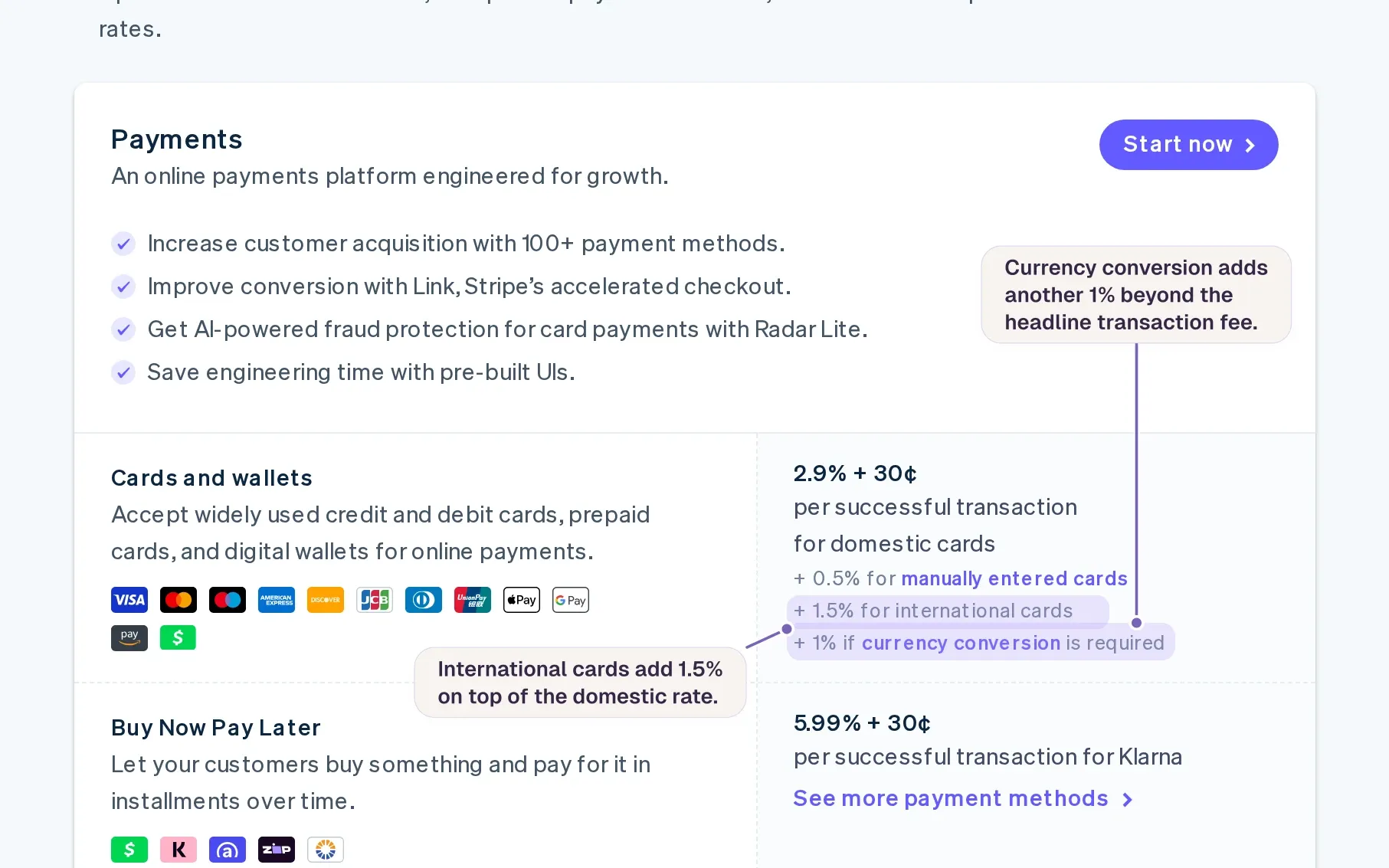
I would check those dependencies alongside the fee on an international renewal. Your replacement needs to support how you charge and deliver your product, or you need a plan to replace the missing tools.
1. Polar
Polar is a merchant of record for SaaS teams that need metered billing and developer tools. Starter charges 5% + 50¢ per transaction, which leaves $94.50 from a $100 sale before applicable surcharges and payout costs.
Polar’s CLI lets you forward webhooks to a local handler and trigger sample events before deployment. Its SDKs validate webhook signatures and give you typed payloads.
Testing checkout requires a separate sandbox account and organization, with its own API configuration and tokens. Test purchases use Stripe test cards without processing real payments.
Sandbox customer emails only reach organization members and their sub-addressing aliases, so use a member’s inbox to check the email flow.
I would consider Polar’s local workflow a useful fit for a team building its own integration. Budget for the separate sandbox configuration if you need to test that integration before going live.
2. Lemon Squeezy
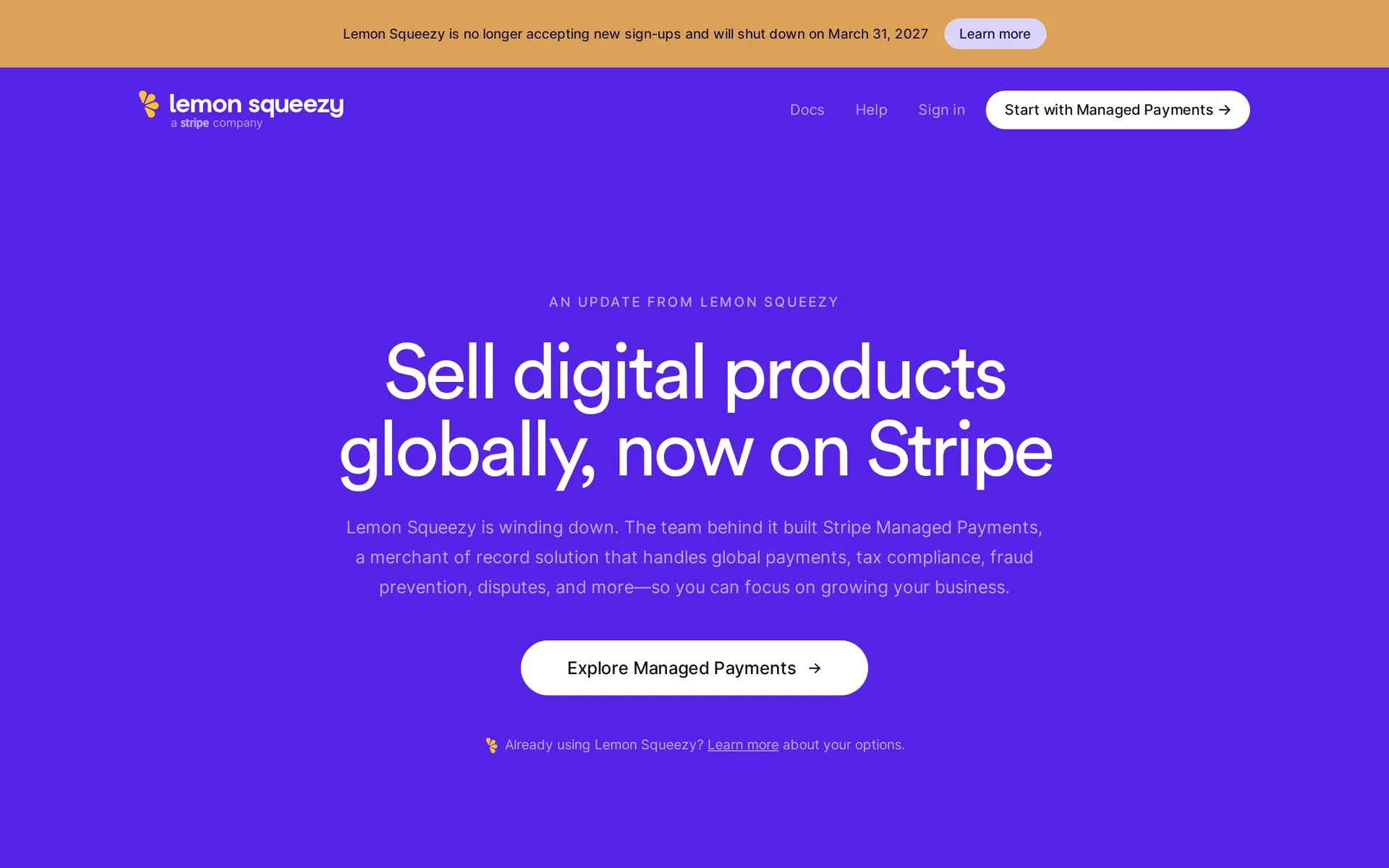
Stripe-owned Lemon Squeezy gives existing merchants a store and a built-in affiliate program. Lemon.js lets checkout run inside your application with customer details prefilled.
Lemon Squeezy accepts no new users or stores.
Order, subscription and license-key webhooks return checkout data in meta.custom_data, but your team still maintains customer records and controls access based on payments.
On a $100 sale, Lemon Squeezy’s 5% + 50¢ base fee comes to $5.50, leaving $94.50 before applicable surcharges and payout costs.
Those integration capabilities are useful, but I would prioritize the replacement path. Existing checkout links and integrations do not redirect automatically when you move.
In the recommended transition to Stripe Managed Payments, customers manage subscriptions and payment methods through Link. Stripe Managed Payments has no storefronts or digital fulfillment, so files, license keys and download links need separate tools.
Map the checkout links, purchase events and customer help pages your product relies on, then update them for your chosen provider. All Lemon Squeezy transaction processing, including renewals, stops on March 31, 2027, with no extensions.
Polar vs Lemon Squeezy: can each platform accept your business and product?
Polar permits software and SaaS, but product restrictions and seller-location requirements still apply. Lemon Squeezy is closed to new merchants.
Calling your product SaaS does not settle eligibility on Polar. If your platform lets non-Polar sellers offer products or services, it falls into a prohibited category, but that does not mean every AI or API wrapper is prohibited.
Polar also prohibits products such as job boards and automated outreach services. Before building the integration, check your product’s use case, audience and transaction flow against its Acceptable Use Policy.
Seller location needs its own check, separate from buyer-country coverage.
Polar vs Lemon Squeezy pricing: what the same sale costs on each
Polar Starter charges 6.5% + 50¢ for a subscription paid with a non-US card. New organizations get Starter pricing, even when an existing user creates them.
Organizations created before May 27, 2026 that keep Polar’s Early Member schedule pay 6% + 40¢ for the same payment.
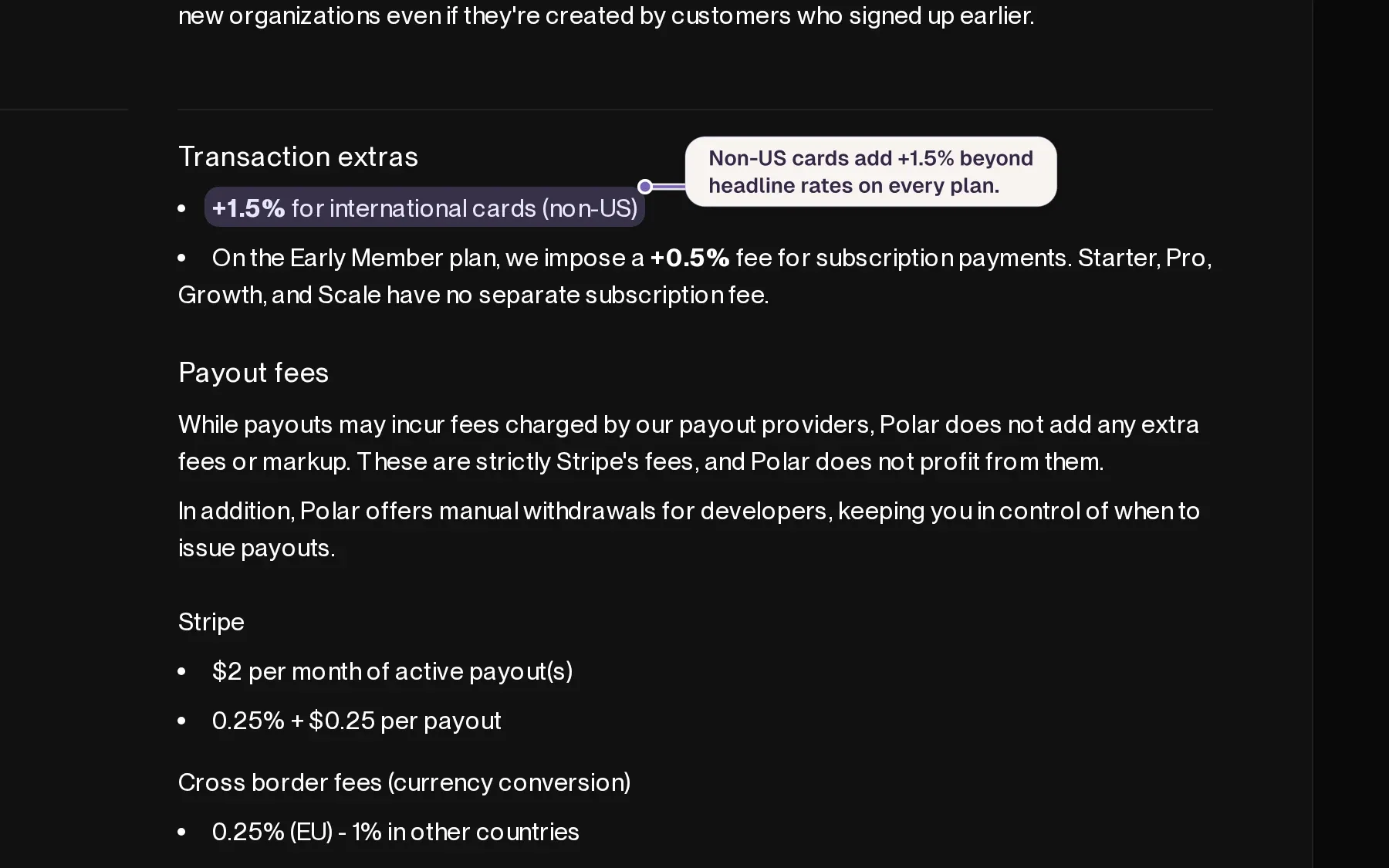
Polar adds 1.5% for non-US cards on every plan, but Starter has no separate subscription surcharge. Early Member adds a 0.5% subscription surcharge to its 4% + 40¢ base rate.
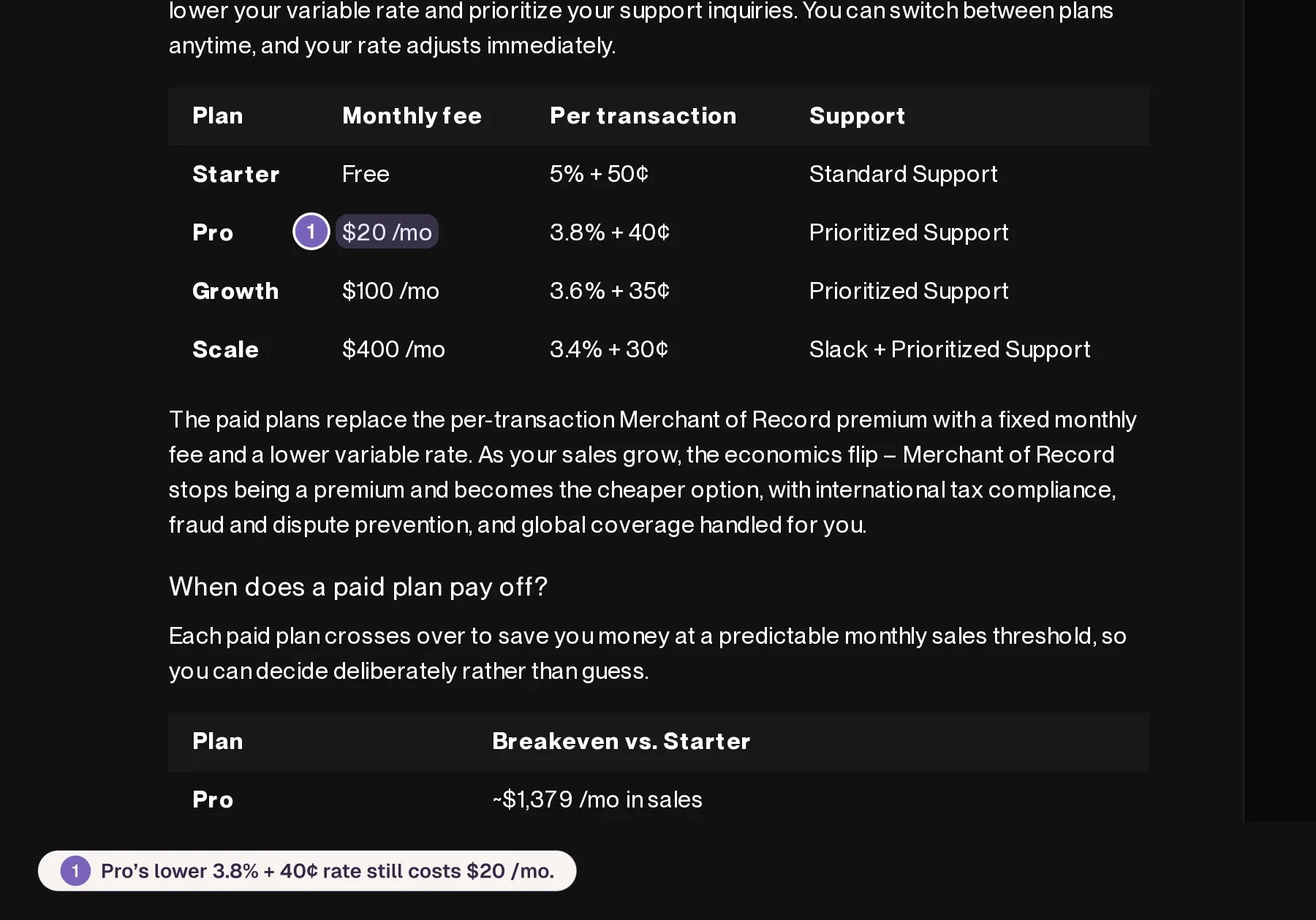
Lemon Squeezy’s fee documentation at docs.lemonsqueezy.com/help/getting-started/fees lists a 5% + 50¢ base rate, plus 1.5% for non-US transactions and 0.5% for subscription payments. Creem has no international card fee.
A $20 subscription paid with a US-issued card and no tax costs $1.50 in fees on Polar Starter, $1.30 on Early Member and $1.60 on Lemon Squeezy.
For a $20 subscription paid with a non-US card, Polar Starter charges $1.80 and Early Member charges $1.60.
Lemon Squeezy charges $1.90, including its subscription and international fees. At 3.9% + 40¢, Creem charges $1.18.
For a $100 subscription paid with a non-US card, Polar Starter charges $7.00, Early Member charges $6.40, Lemon Squeezy charges $7.50, and Creem charges $4.30.
The three USD card-payment examples calculate fees on the product price before tax, assuming no tax is added. They exclude affiliate and abandoned-cart attribution, payout costs and monthly plan charges.
To estimate your monthly cost, multiply each known transaction fee by the number of renewals at that price, then add payout costs, applicable feature and plan charges, and confirmed international fees.
Polar vs Lemon Squeezy billing features: subscriptions, usage and license keys
Polar can bill measured usage on a different cycle from the subscription renewal. Existing Lemon Squeezy stores support subscriptions and license-key workflows.
Lemon Squeezy records usage through its API, aggregates it as a sum, latest value or maximum, and bills in arrears. Checkout for a usage-based subscription starts with a zero initial charge.
For an annual subscription with monthly usage charges, Polar creates separate usage orders and can provide monthly credit grants. Those grants are not a prepaid wallet with auto-refill.
The usage orders emit order.created and order.paid events, so an integration that listens only for subscription renewals will miss them. Handle those order events in your billing integration.
Once Polar ingests a usage event, it cannot be changed or deleted. Check the usage data your product sends before submitting it, because it becomes part of the billing record.
For licensed software, Polar offers license keys as product benefits. Lemon Squeezy sends license-key webhook events that your application can use alongside its own access logic.
Creem also supports postpaid metered invoices. For prepaid access, its Customer Credits ledger can hold credit packs or monthly allowances, with your code debiting the balance as customers use the product and automatic refills keeping it topped up.
Polar vs Lemon Squeezy: payouts and affiliates
When affiliates bring in subscribers, moving billing also means tracking who referred each customer and what they are owed. Before its processing deadline, Lemon Squeezy schedules bank wire or PayPal payouts to existing stores twice monthly, while its affiliate program pays partners separately.
Polar with a separate affiliate tool can suit a team whose attribution and payouts already work, though it can mean two code paths. Developer Rishi Raj Jain used Lemon Squeezy for affiliates and Polar for checkout before replacing both with Creem’s built-in affiliates.
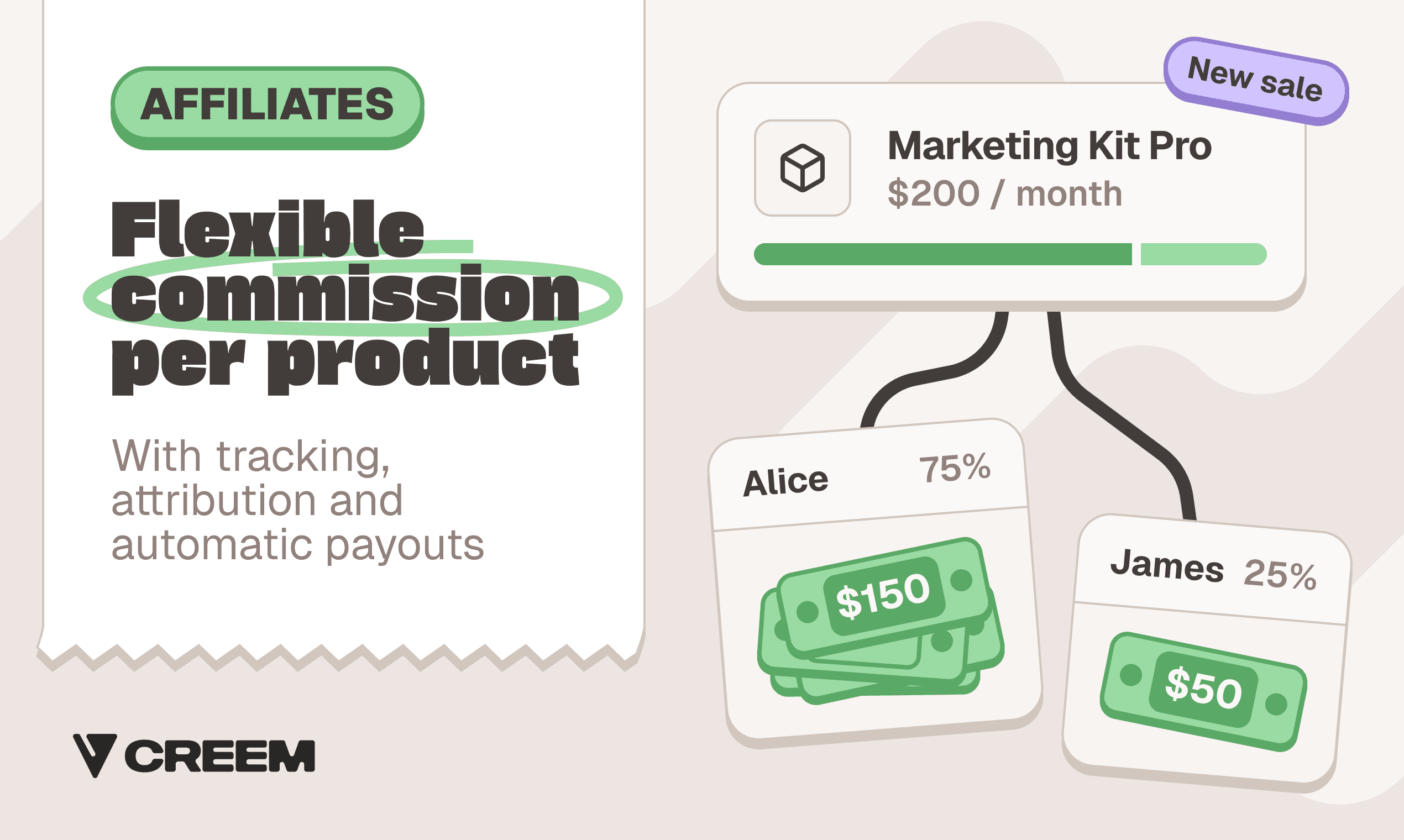
If you’re moving an active Lemon Squeezy affiliate program to Creem, settle unpaid commissions first. Lemon Squeezy holds commissions for 30 days and creates affiliate payouts on the 1st and 15th.
Keep the store open until the last approved referrals are paid, and preserve records of referral attribution, unpaid commissions and recurring commission obligations.
Then set up the Creem affiliate program and send partners new links, because old Lemon Squeezy affiliate links do not carry over. Each Creem link goes through Creem's domain, sets the attribution cookie and redirects the buyer.
Affiliates also need to pass a KYC check and reach a 50 USD or EUR minimum before payout on the 1st or 15th, so explain the verification requirement early.
Polar vs Lemon Squeezy: which one should you choose?
Polar fits teams that bill measured usage in arrears through meters and whose product and seller location qualify.
Lemon Squeezy stops processing transactions, including renewals, on March 31, 2027, so plan subscriber and license-holder access alongside any affiliate replacement before then.
Moving to Polar with usage billing
Polar can pair an annual base subscription with monthly usage invoices, but your application still needs to enforce consumption limits. If a separate usage payment fails, the subscription and its benefits stay active, so build controls for unpaid usage into your product.
Usage events received after an invoice closes count toward the period in which they arrive. Send events promptly if you want the charges to land in the intended period.
If affiliates drive sales
Lemon Squeezy’s built-in affiliate program matters to existing sellers, but it is not an option for a new business. When choosing a replacement, account for referral attribution and outstanding commissions alongside subscriber billing.
Choosing a new provider or migration destination
Polar is discussing a way to transfer existing Lemon Squeezy subscriptions without customers re-entering their card details. In the meantime, new buyers can check out on Polar while existing subscribers renew on Lemon Squeezy until processing stops. PayPal subscribers need to start a new subscription with a supported payment method. Customers using India-issued cards, Cash App Pay or Link need to add another payment method to use Polar.
For license holders, Polar is investigating whether existing Lemon Squeezy keys can move unchanged. Polar issues keys for new purchases, so export your existing license records and plan how your product will validate those keys through the transition.
Polar connects to Affonso for affiliate tracking. Preserve Lemon Squeezy referral and commission records, settle unpaid commissions, and agree with your affiliate provider on how existing referrals will be tracked after the move.
Moving to Creem instead
For an existing store, map subscriber access through the move before comparing fees. New buyers use Creem checkout links.
Self-serve does not import active Lemon Squeezy subscriptions or saved cards, so each subscriber checks out once on Creem near their renewal date to avoid paying twice.
New Creem purchases get new license keys, while existing Lemon Squeezy keys stay outside Creem, so plan how your product will validate them through the transition.
Order history stays in Lemon Squeezy. Export it as CSV before March 31, 2027.
Done-for-you migration
You can apply for Creem's Lemon Squeezy migration offer without a Creem account.
Creem's team moves your products, discount codes and customers, with active subscriptions optionally included by arrangement with the team.
The offer includes a first month at $0 processing fees and priority support.
After that, the standard rate is 3.9% + 40¢ per successful transaction with no monthly fee, including tax, invoicing, compliance and dispute handling.
Self-serve migration
The Lemon Squeezy migration guide walks you or your AI agent through the move, including using the CLI to migrate your product catalog.
When surcharges stack on international subscriptions
For a $100 renewal charged to a non-US card, Polar Starter charges $7. Creem’s transaction fee is $4.30, leaving $95.70 after Creem fees. Lemon Squeezy’s base and subscription fees come to $6, and the international fee brings the total to $7.50.
Creem’s standard rate has no international-card, subscription or premium-card surcharge, and no monthly fee, setup fee or minimum volume. Its merchant-of-record service covers tax, invoices and dispute handling.
Optional features
Revenue splits, abandoned-cart recovery and an affiliate program are available on Creem’s standard plan.
Payouts and chargebacks
With Creem, you can receive payouts to a bank account or in USDC on Polygon.
When a buyer challenges a charge, Creem handles the payment dispute.
Where to move your Lemon Squeezy store
Creem is the legal seller for software and digital-product sales and charges 3.9% + 40¢ per successful transaction, below the 5% + 50¢ base rate on Lemon Squeezy and Polar Starter.
For Lemon Squeezy sellers who sell subscriptions, credit packs or license keys, Creem keeps affiliates on the same merchant-of-record balance, with a 2% affiliate fee on the standard plan.
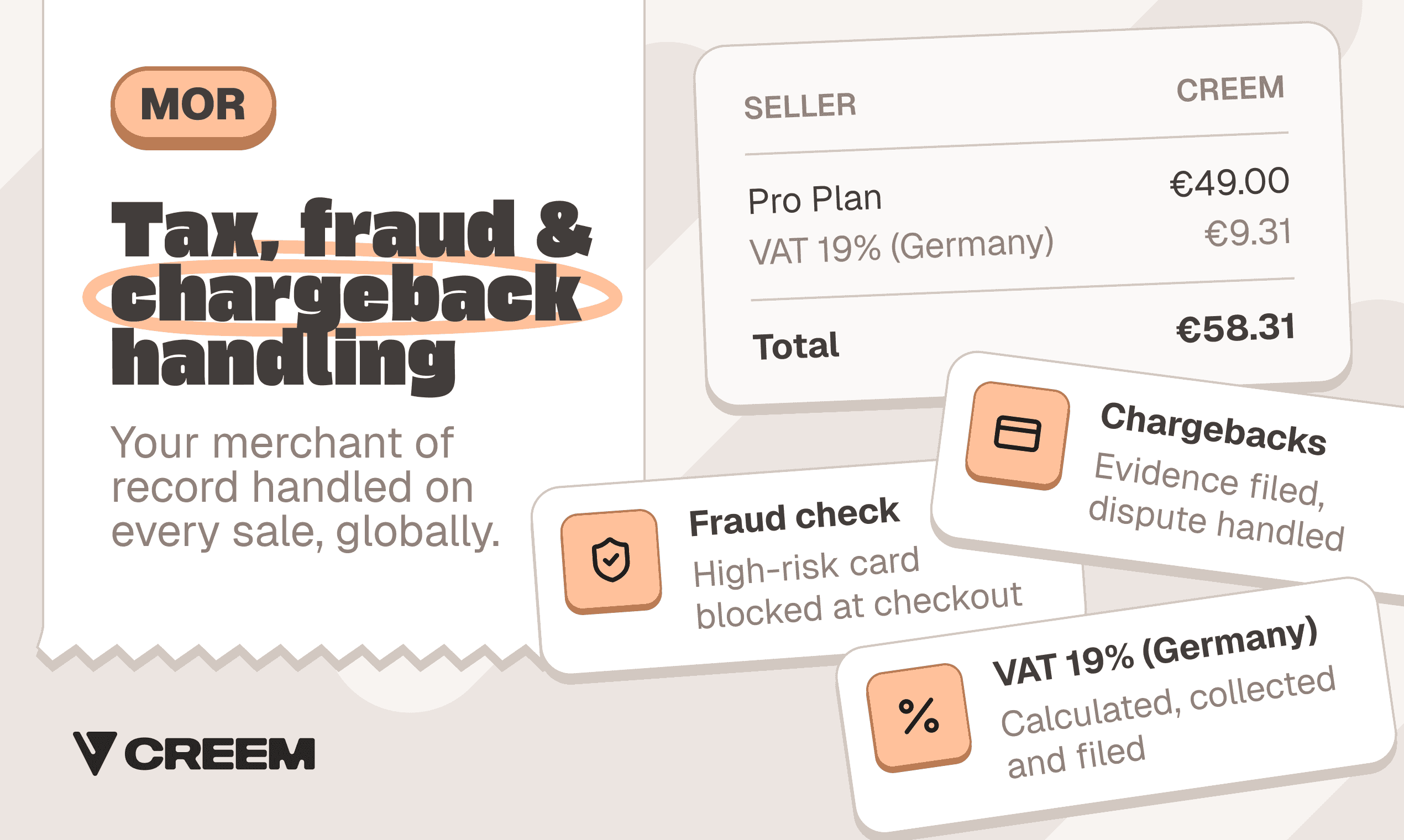
Polar Pro charges a slightly lower rate, but adds a monthly fee that Creem's standard plan does not charge. As the legal seller, we collect and remit VAT, GST and sales tax for buyers in 190+ countries.
As the legal seller, we collect and remit VAT, GST and sales tax worldwide.
To move with help from the team, apply for Creem's Lemon Squeezy migration offer.
You can try Creem to test your checkout before moving the store.