
The most popular advice about subscription based pricing is incomplete: reduce churn at all costs, push annual plans, and charge more as customers use more. That playbook can improve a dashboard while damaging the relationship underneath it. Customers don't want to be trapped in a contract they can't understand or exit. They want a price that reflects value, a bill they can predict, and a product they can return to when circumstances change.
The stronger approach treats pricing as a lifecycle system, not a checkout screen. Monthly and annual plans matter, but so do pause states, downgrade paths, reactivation flows, usage limits, payment recovery, and the infrastructure that connects them. The operators who handle those mechanics well usually create more durable revenue than teams focused only on preventing cancellations.
Table of Contents
- Rethinking Churn and the Subscription Lifecycle
- The Scale and Evolution of Recurring Revenue
- Comparing Core Pricing Models for Digital Products
- Optimizing Billing Frequency and Cash Flow
- Designing Flexible Off-Ramps and Pause States
- Navigating Price Increases and Variable Billing
- Executing Global Subscription Infrastructure
Rethinking Churn and the Subscription Lifecycle
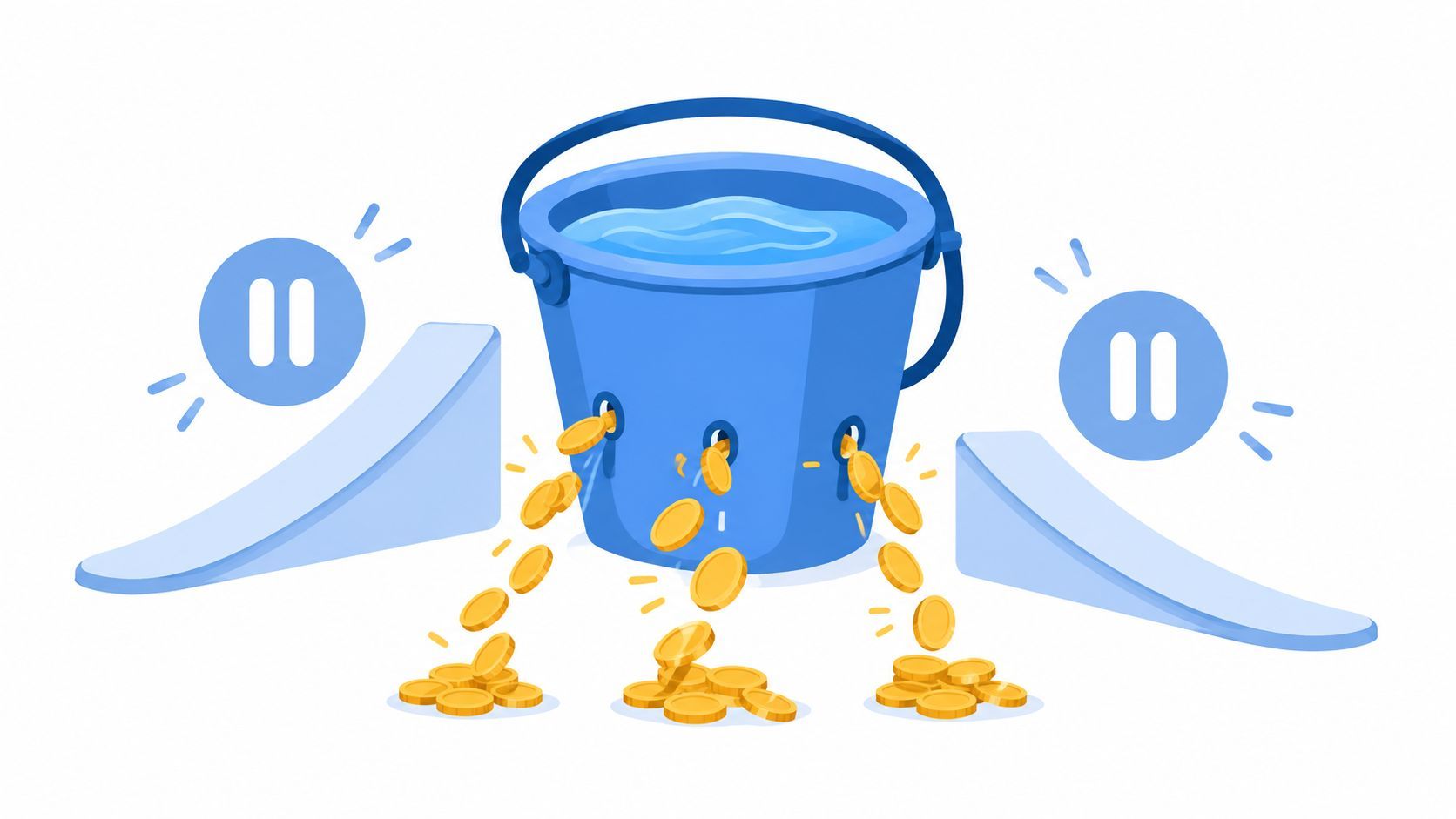
Churn isn't always a permanent failure. A customer may leave because a project ended, spending tightened, usage became seasonal, or the product solved an immediate need. Making cancellation difficult doesn't change those circumstances. It adds frustration at the moment when the customer decides whether to trust your company again.
Research on subscription behavior found that 31% of consumers frequently cancel and resubscribe, while 74% are more likely to subscribe when cancellation is simple. Those findings support a different operating assumption: some cancellations are temporary changes in usage, not rejections of the product. The goal is to preserve the relationship and make the next purchase easy.
Treat the account as a set of states
A useful lifecycle has more than active and canceled. Model at least these states:
-
Active: The customer has access and recurring billing is running.
-
Paused: Billing stops temporarily while agreed data, settings, or seats remain available according to your policy.
-
Downgraded: The customer keeps a relationship with the product at a lower entitlement level.
-
Canceled: Access and billing follow a clearly communicated end-of-service policy.
-
Reactivated: The customer returns without rebuilding the account from scratch.
This model changes the questions your team asks. Instead of only measuring churn, measure how many customers pause, downgrade, return, and recover value after leaving. The churn analysis framework is useful for separating voluntary cancellations, involuntary payment failures, temporary non-use, and customers who have clearly outgrown the product.
Practical rule: Make leaving easy, but make returning easier.
A pause offer works when the customer has a credible temporary reason to stop. It doesn't work as a universal discount disguised as retention. Give customers clear choices, explain what happens to their data and seats, define the pause duration, and show the next billing event before they confirm.
Cancellation should also trigger a clean reactivation path. Preserve the account where appropriate, explain what will happen to stored data, and let the former customer restart the right plan without repeating setup. Track reactivation rate and recovered lifetime value alongside cancellation volume. A flexible off-ramp may reduce immediate recurring revenue while protecting future demand and brand trust.
The Scale and Evolution of Recurring Revenue
Subscription pricing became credible in digital publishing before it became standard in software. In 1998, the Wall Street Journal charged approximately 150,000 online readers an annual subscription fee of $49, showing that publishers could monetize digital access directly before most newspapers adopted paywalls. The American Press Institute's account of digital subscription adoption documents how publishers later moved toward metered and freemium access to reduce the barrier between free discovery and paid conversion.
Between 2012 and 2015, publications using metered models increased by 21%, freemium models grew by 8%, and hard-paywall models declined by 4%, according to the same analysis. The shift matters because it illustrates a durable packaging principle. Businesses don't have to choose between unrestricted access and a rigid lock. They can let prospects experience value, then place limits around deeper or continued usage.
Why recurring revenue suits software
Software delivers value continuously. Customers receive updates, support, infrastructure, security improvements, and ongoing access rather than a finished physical item. A recurring charge gives the vendor a way to fund that continuing work while giving the buyer a predictable entitlement.
Academic analysis of 50 U.S. newspapers found that digital subscriptions were priced at about 23% of the corresponding print edition, suggesting that early digital pricing reflected differences in delivery cost and perceived product value. Later evidence showed the commercial transition more clearly. From 2019 through the first quarter of 2022, a study of 18 U.S. newspapers recorded a net gain of 290,780 digital subscribers alongside a loss of 544,297 print subscribers. These figures don't prove that subscription pricing alone caused the shift, but they show how recurring digital access replaced a declining physical model.
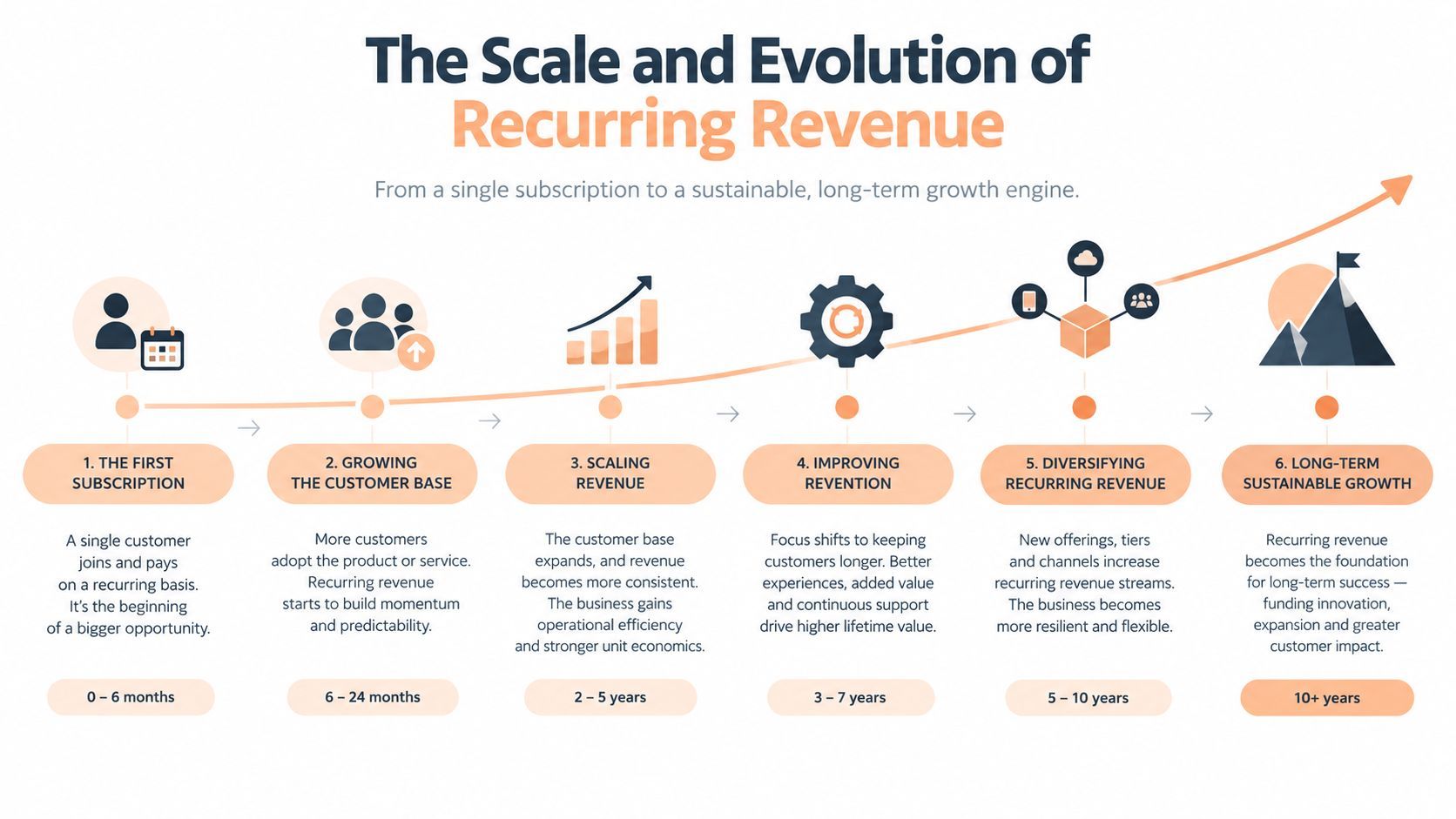
The market is now far larger than publishing. Grand View Research estimated the global subscription-economy market at 492.3 billion in 2024 and projected it to reach 1.5121 trillion by 2033, implying a 13.3% compound annual growth rate from 2025 to 2033. Its estimate put North America at 38.2% of 2024 revenue, B2B subscriptions at 55.2%, and fixed subscriptions at 48.1% of the market. The report also projected $628.2 billion in 2026, which is a projection, not a current result. See the ARR calculation guide for subscription businesses when connecting recurring plans to operating forecasts.
For software operators, the implication is practical. Recurring revenue supports forecasting, but only when the underlying plans are understandable and the renewal mechanics work. A large annual contract can hide weak adoption. A growing monthly base can conceal payment failures. Revenue quality depends on retention, expansion, entitlements, and customer value, not merely the presence of a recurring charge.
Comparing Core Pricing Models for Digital Products
The right model follows the product's value metric. If customers value access to a stable tool, a flat subscription may be appropriate. If different customer groups need distinct capabilities, tiers can segment willingness to pay. If value and delivery cost rise with consumption, a hybrid model can connect expansion to measurable usage.
| Model | Best For | Primary Trade-off |
|---|---|---|
| Flat-rate subscription | Products with consistent usage and a simple promise | Easy to understand, but heavy users may be underpriced and light users may feel they overpay |
| Tiered subscription | Products serving distinct customer segments with different needs | Captures willingness to pay, but feature gates can create friction and confusing upgrade decisions |
| Hybrid subscription plus usage | Products with a predictable core entitlement and variable consumption | Creates expansion potential, but requires accurate metering, forecasts, and overage controls |
Flat rate favors clarity
Flat pricing gives every customer the same core deal. That simplicity helps a new product communicate its value quickly, reduces billing questions, and makes revenue easier to model. It works especially well when usage patterns are similar and marginal delivery costs don't vary much between customers.
The limitation appears as customers grow. A high-value account may consume far more infrastructure or derive substantially more value while paying the same amount as a small account. Raising the flat price affects everyone, including customers whose usage hasn't changed. That can make a broad price increase feel arbitrary.
Tiers segment demand, but packaging can go wrong
Tiered pricing gives buyers a path from basic access to advanced capabilities. The strongest tiers differ by a customer-recognizable outcome, such as collaboration, automation, support, or governance. The weakest tiers scatter features across a grid and force buyers to decode internal product architecture.
Keep the upgrade decision tied to value. A customer should understand why a higher tier matters and what changes after purchase. Avoid taking away a basic workflow solely to manufacture urgency. If every meaningful action is gated, prospects experience the pricing page as a negotiation rather than a clear product map.
Hybrid pricing captures expansion
A hybrid structure combines a recurring base with a usage allowance or metered component. The subscription creates a minimum revenue floor, while usage lets the bill grow when the customer consumes more API calls, storage, processed data, AI credits, or active seats.
The 2025 SaaS Performance Metrics Benchmarks reported 110% median net revenue retention for hybrid pricing, compared with 92% gross revenue retention for usage-based pricing and 88% for both traditional subscription and hybrid environments. These are benchmark associations, not proof that pricing structure alone caused the outcomes. The same benchmark reported 44% median growth for usage-based companies in 2024, compared with 25% for traditional subscription businesses, again without establishing causation.
Hybrid pricing only works when the customer can anticipate the bill. Meter usage in real time, make billing events idempotent, apply proration consistently, and show thresholds before an overage occurs. A useful budget-planning reference is LLMrefs' guide to reporting platform budgets, particularly for teams translating variable product costs into understandable customer packages.
Optimizing Billing Frequency and Cash Flow
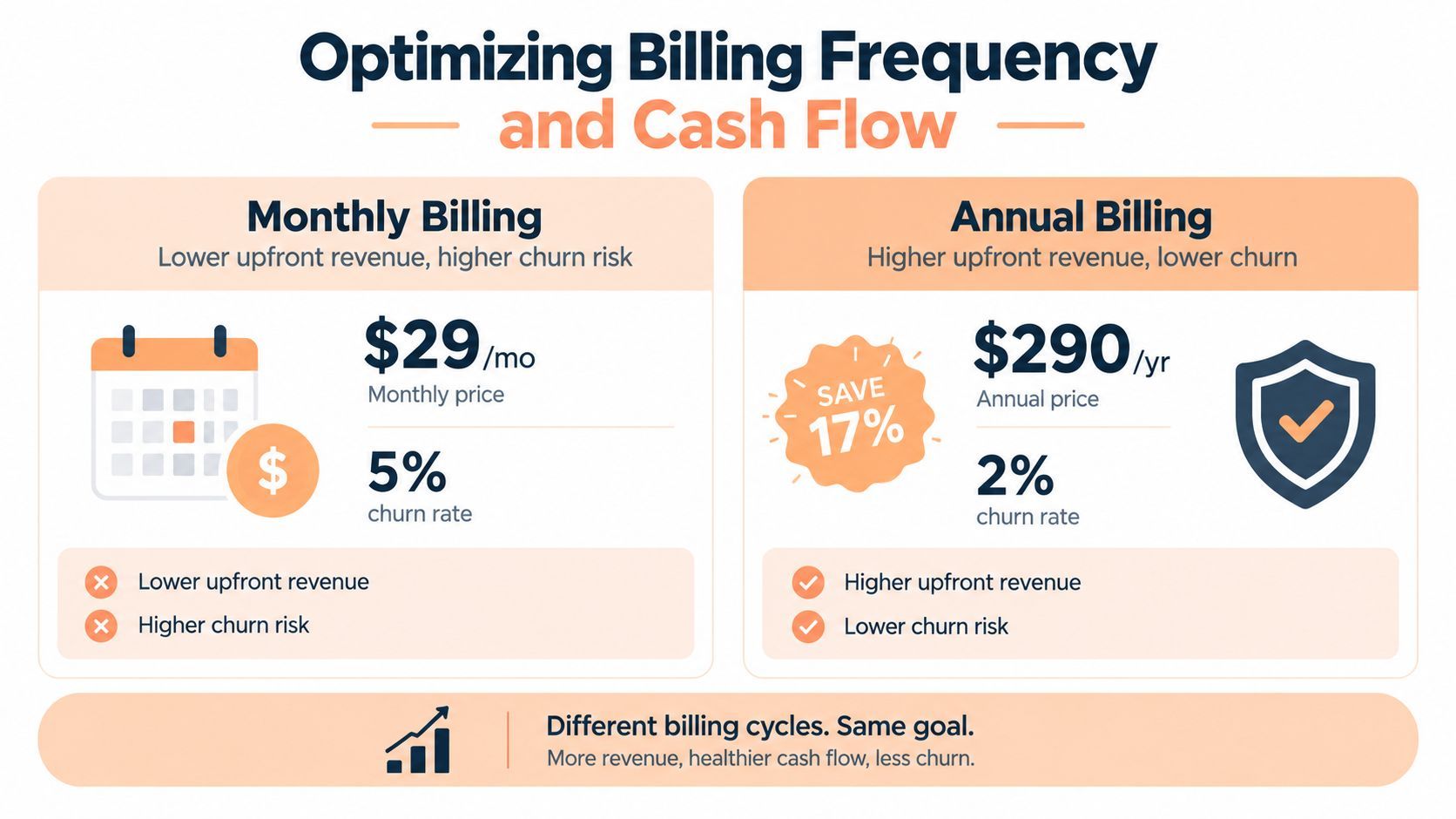
Monthly and annual billing solve different problems. Monthly plans reduce the commitment required to start, while annual plans improve cash collection and reduce the number of renewal moments in a customer relationship. Offering only one frequency forces every buyer into the same risk profile.
A 2025 SaaS pricing benchmark reports annual-plan churn of roughly 5% to 10%, compared with 30% to 50% for monthly plans, and estimates revenue predictability at 80% to 90% for annual billing versus 60% to 70% for monthly billing. The source attributes the difference partly to fewer renewal decisions and payment attempts, which reduces exposure to expired cards, failed debits, and temporary payment errors. See the 2025 SaaS pricing playbook for the benchmark context.
Build the offer around adoption friction
Use monthly billing where customers need to validate value, especially for new products, smaller teams, or uncertain usage. Put the annual option beside it, not behind a sales conversation, and make the economic difference visible without turning the monthly price into a punishment.
An annual discount should compensate customers for commitment without eroding the margin needed to support them. Test the offer against gross margin, support demand, payment costs, and the likelihood that an annual customer will actually adopt the product. A prepaid year isn't healthy revenue if the buyer never reaches meaningful usage.
Cash collection isn't revenue recognition.
Keep financial and product logic separate. Annual cash receipts should be recognized over the service period rather than treated as immediately earned revenue. Entitlements must also reflect the contract: a customer who changes plans mid-cycle needs clear rules for access, proration, refunds, credits, and the date when the new entitlement begins.
Protect renewals operationally
Send renewal reminders well before the commitment ends. Display the renewal date, price, currency, tax treatment, and cancellation terms in language the customer can understand. For monthly plans, use automated recovery workflows for failed payments rather than treating the first decline as a voluntary cancellation.
Local currency display and tax-inclusive pricing where required can remove uncertainty at checkout. The billing system should expose subscription state through reliable webhooks so the application doesn't grant or revoke access based on a stale payment assumption.
The mechanics become more important as plans multiply. A monthly-to-annual upgrade, an annual downgrade, and a mid-cycle seat change all need deterministic outcomes that finance, support, and customers can reconcile.
Designing Flexible Off-Ramps and Pause States
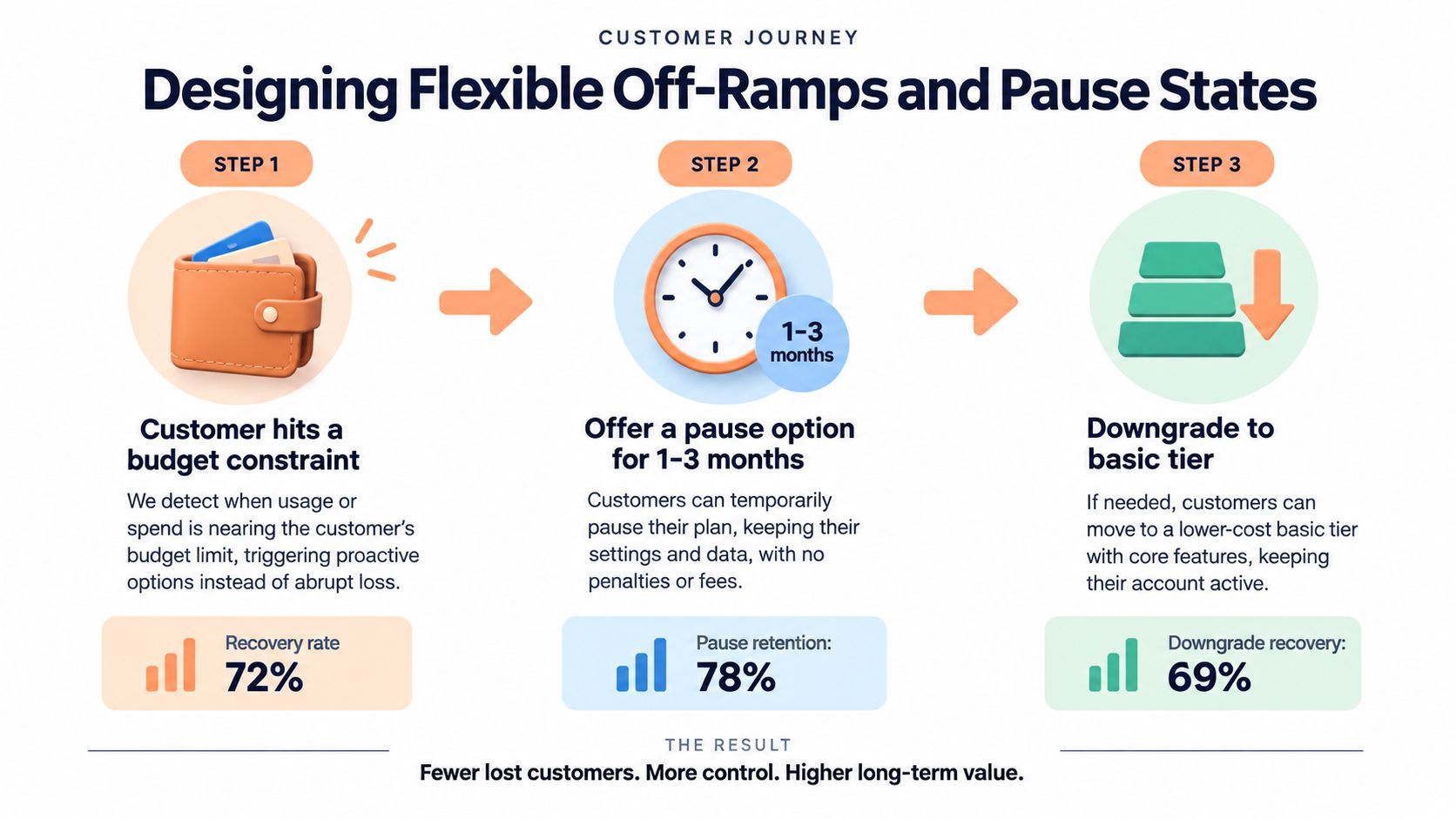
A cancellation flow should answer a practical question: what is the customer trying to stop? They may want to stop billing, reduce seats, preserve data, remove an expensive feature, or take a short break. A single cancellation button treats all of those situations as identical and discards useful information.
Pause and downgrade states turn pricing architecture into lifecycle management. They give customers control without forcing the company to abandon the account immediately. The design must remain honest. Don't label a downgrade as a pause, keep billing active after a customer thinks it has stopped, or hide data retention terms in fine print.
Define what pause actually means
A pause policy should specify:
-
Billing: Whether recurring charges stop immediately or at the end of the current period.
-
Access: Which features remain available during the pause.
-
Data: How long customer data, configurations, and history are retained.
-
Seats: Whether seats are frozen, reduced, or removed.
-
Duration: Whether the customer selects a fixed period or must return manually.
-
Reactivation: Which plan and price apply when the account resumes.
Retaining data is often more valuable than retaining every feature. A seasonal creator may not need active processing for a while but may still need projects, settings, and historical records intact. A basic tier can preserve the relationship when a customer no longer needs collaboration, automation, or higher usage limits.
Test recovered value, not just saved cancellations
Run experiments that compare a pause offer with a standard cancellation flow. Measure reactivation rate, time to return, revenue recovered after reactivation, support contacts, and the cost of storing inactive data. Compare those results with downgraded accounts and fully canceled accounts.
The result may show that a pause is valuable for seasonal usage but ineffective for customers who no longer see product value. That distinction helps teams target the intervention instead of adding another generic retention discount.
A strong reactivation flow remembers the customer's prior plan, restores relevant settings, and shows the next charge before confirmation. Win-back messaging should reflect the reason for leaving. A budget-sensitive customer may respond to a lower entitlement, while a seasonal customer needs a clear restart date and preserved workspace.
A lower-value active account can be healthier than a forced cancellation, provided the customer understands the trade.
Don't evaluate these options only through short-term monthly recurring revenue. Track recovered lifetime value, reactivation quality, product engagement after return, and whether customers voluntarily move back to a higher plan. Flexible off-ramps work when they preserve trust and make future value easy to access.
Navigating Price Increases and Variable Billing
Price increases become difficult when customers can't connect the new amount to a better outcome. They become even harder when a flat price is replaced with usage charges that buyers can't forecast. Transparency isn't a courtesy here. It's the operating mechanism that keeps a pricing change credible.
A 2025 consumer survey found that 90% of consumers noticed a price increase during the prior year, but only 58% considered it justified. The same research found that 78% wanted options to pause or swap subscriptions and 70% were open to usage-based pricing. The figures point to a useful distinction: customers may accept change when they can understand the reason and retain control over the commitment.
Segment the change before announcing it
Don't apply one message to every account. Separate new customers, recent purchasers, long-standing customers, discounted accounts, annual subscribers, and customers with high usage or high support needs. Consider grandfathering existing customers for a defined period, extending a legacy rate, or offering a transition credit when a new structure changes the purchase decision.
Explain what changed in the product and which customer outcome the new price supports. Avoid vague claims about investment or market conditions unless you connect them to visible improvements such as higher limits, new workflows, reliability work, or expanded support. Give customers the effective date, the new amount, the billing frequency, and a clear way to choose another plan.
The usage-based pricing guide for software can help teams assess whether the chosen metric reflects customer value rather than merely internal cost.
Make variable bills governable
A hybrid plan should include a base allowance, a clearly defined unit of usage, and an overage rule that customers can calculate. Add:
-
Forecasts: Show current usage and an estimate for the next invoice.
-
Alerts: Notify account owners before a limit or spending threshold is reached.
-
Caps: Let customers block or approve additional consumption.
-
Auditability: Make each billable event traceable to the invoice.
-
Grace rules: Explain what happens when usage exceeds an entitlement.
A 2025 SaaS pricing study reported that hybrid subscription-plus-usage models had the highest median growth rate at 21%, while 73% of companies using usage-based pricing actively forecast variable revenue. These results don't establish that hybrid pricing caused growth, but they reinforce the operational need to forecast variable consumption rather than leave finance and buyers guessing.
Test price changes with segments and observe conversion, downgrade behavior, support volume, involuntary churn, and expansion. A successful change isn't only one that raises average revenue. It preserves the customers who receive continuing value and gives uncertain buyers a safe way to adjust.
Executing Global Subscription Infrastructure
A pricing model becomes real only when checkout, tax, access, invoicing, renewals, and reporting agree with one another. Global software companies need more than a payment form. They need a system that knows which customer bought which entitlement, in which currency, under which tax treatment, and what should happen after a failed renewal or mid-cycle plan change.
Start with the operational contract
Define these objects before adding complex plans:
-
Product and price catalog: Store plan versions, currencies, billing cycles, included usage, overage rules, and effective dates.
-
Subscription state: Represent active, trialing, paused, past-due, canceled, downgraded, and reactivated states explicitly.
-
Entitlements: Separate access rights from payment status so the application can apply plan limits consistently.
-
Usage ledger: Record billable events with idempotency keys, timestamps, customer identifiers, and reconciliation logic.
-
Billing events: Use reliable webhooks for renewals, failures, refunds, upgrades, downgrades, and cancellations.
-
Customer controls: Expose invoices, payment methods, plan changes, cancellation, and usage visibility through a self-service portal.
This separation prevents a common failure mode. The payment provider may confirm a charge, but the product still needs to decide which features the customer can use. Conversely, a usage meter can detect an entitlement limit without directly handling tax, invoices, or payment retries.
Plan for global friction
Multi-currency checkout reduces mental conversion work for buyers. Local payment methods such as cards, Apple Pay, Google Pay, and SEPA can improve fit across markets. Tax handling must account for VAT, GST, and sales tax collection, filing, and remittance rather than relying on a spreadsheet maintained after launch.
A Merchant of Record can consolidate checkout, tax compliance, subscription billing, invoices, payment recovery, and related operational workflows. Creem operates in that category for software and digital product companies, with hosted global checkout, recurring billing, plan changes, proration, customer self-service, automated tax handling, and payment recovery. Teams evaluating an internal build can also use TekRecruiter's overview of billing technologists and platforms to understand the specialist skills required across billing systems.
Make failure recoverable
Payment failures deserve their own state and workflow. Retry intelligently, notify the customer through useful channels, preserve access according to policy, and record the outcome of every attempt. Don't let an expired card silently convert an engaged customer into involuntary churn.
Reconcile usage, invoices, payouts, refunds, and revenue recognition on a schedule your finance team can operate. Test webhooks for duplication, delay, out-of-order delivery, and partial failure. Pricing flexibility helps only when the infrastructure can enforce it consistently and explain every charge.
Creem gives software companies and digital product makers a Merchant of Record foundation for global checkout, tax compliance, recurring subscriptions, plan changes, payment recovery, and customer self-service. If you're moving from flat plans toward pause states, hybrid usage, or international billing, visit Creem to evaluate the integration and subscription workflows against your pricing model.